Shrine Figure for Sàngó (c. 1910): Art, History and Details
Shrine Figure for Sàngó at the Cleveland Museum of Art: c. 1910, Wood, probably bluing, and organic material. Explore the work's context, creator attribution and collection history.
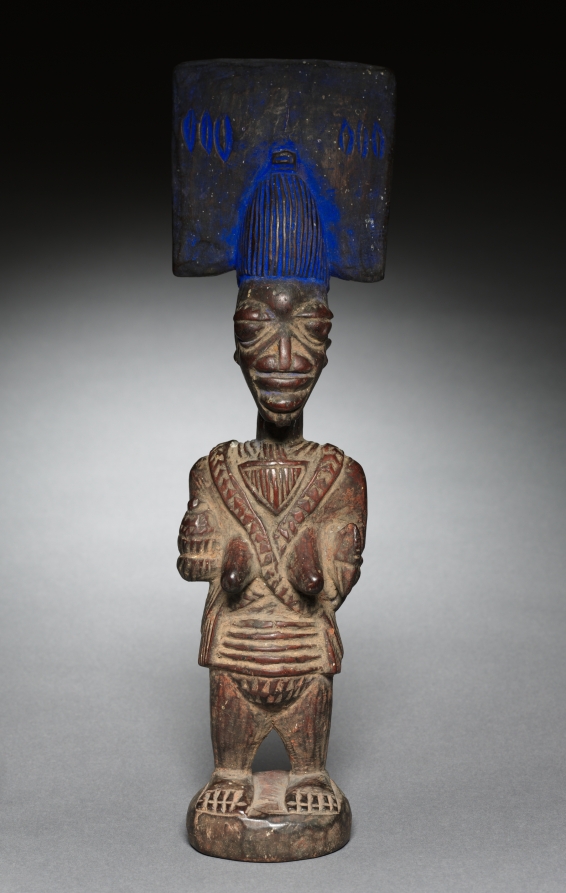
Shrine Figure for Sàngó (c. 1910) is in the Cleveland Museum of Art collection.
The work and its context
The museum's open-access catalogue describes the work:
Sàngó is a king turned god in the Yorùbâ cosmology. One of the many òrìṣà—a god or divine spirit—that Yorùbá people can become devotees of and appeal to, Sàngó is often associated with lightning and thunder. The shape atop the female figure's head is the double-axe symbol of Sàngó. She wears a triangle-shaped amulet, waist beads, and bracelets, all signifying that she is a priestess. Standing on a base, rather than a handle, this figure was likely placed in a shrine dedicated to Sàngó.
Object facts
- Title: Shrine Figure for Sàngó
- Date: c. 1910
- Culture: Africa, West Africa, Nigeria, Yorùbá-style maker
- Type: Sculpture
- Technique: Wood, probably bluing, and organic material
- Dimensions: Overall: 38.7 cm (15 1/4 in.)
- Collection: African Art
- Department: African Art
- Accession number: 1972.339
A detail from the museum
The bright blue color on this sculpture is bluing, a powdered product used to brighten laundry.
Collection credit
Gift of Katherine C. White
Further reading listed by the museum
- Fagg, William, and Cleveland Museum of Art. 1968. African Tribal Images; the Katherine White Reswick Collection. Cleveland: Cleveland Museum of Art, no. 119.
View the collection record
See the museum's photographs and full catalogue entry. Catalogue text is reproduced from the Cleveland Museum of Art's open-access data, with HTML formatting removed. This object and its supplied image are designated CC0.
Sources
More in Lifestyle
Keep reading