Shuyadō (Studio of Lofty Rusticity) (1700s): Art, History and Details
Shuyadō (Studio of Lofty Rusticity) at the Cleveland Museum of Art: 1700s, hanging scroll, ink on paper. Explore the work's context, creator attribution and collection history.
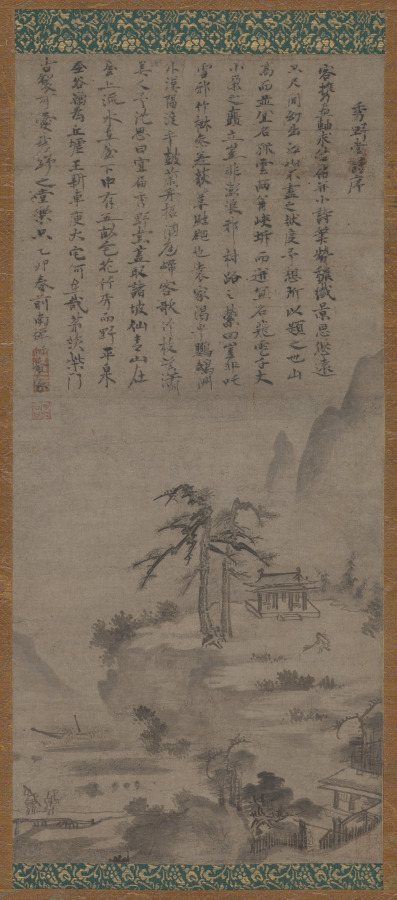
Shuyadō (Studio of Lofty Rusticity) (1700s) is in the Cleveland Museum of Art collection. The museum's creator attribution is Bunsei (Muncheong) (Japanese or Korean, active mid-15th century); Chikuan Daien (Japanese, 1362–1439).
The work and its context
The museum's open-access catalogue describes the work:
Hanging scrolls with assorted poems above and ink paintings below produced within Japan's Zen monastic community during the 1400s and 1500s are called poem-painting scrolls (shigajiku). This small painting was created much later in emulation of such works. While the original works often have a preface followed by poems by different monks, this composition has only a preface.
Object facts
- Title: Shuyadō (Studio of Lofty Rusticity)
- Date: 1700s
- Creator attribution: Bunsei (Muncheong) (Japanese or Korean, active mid-15th century); Chikuan Daien (Japanese, 1362–1439)
- Culture: Japan, Edo period (1615–1868)
- Type: Painting
- Technique: hanging scroll, ink on paper
- Dimensions: Overall: 63.1 x 28.8 cm (24 13/16 x 11 5/16 in.)
- Collection: ASIAN - Hanging scroll
- Department: Japanese Art
- Accession number: 2015.515
Collection credit
Gift from the Collection of George Gund III
View the collection record
See the museum's photographs and full catalogue entry. Catalogue text is reproduced from the Cleveland Museum of Art's open-access data, with HTML formatting removed. This object and its supplied image are designated CC0.
Sources
More in Lifestyle
Keep reading