Silenus and King Midas (mid-1500s): Art, History and Details
Silenus and King Midas at the Cleveland Museum of Art: mid-1500s, engraving. Explore the work's context, creator attribution and collection history.
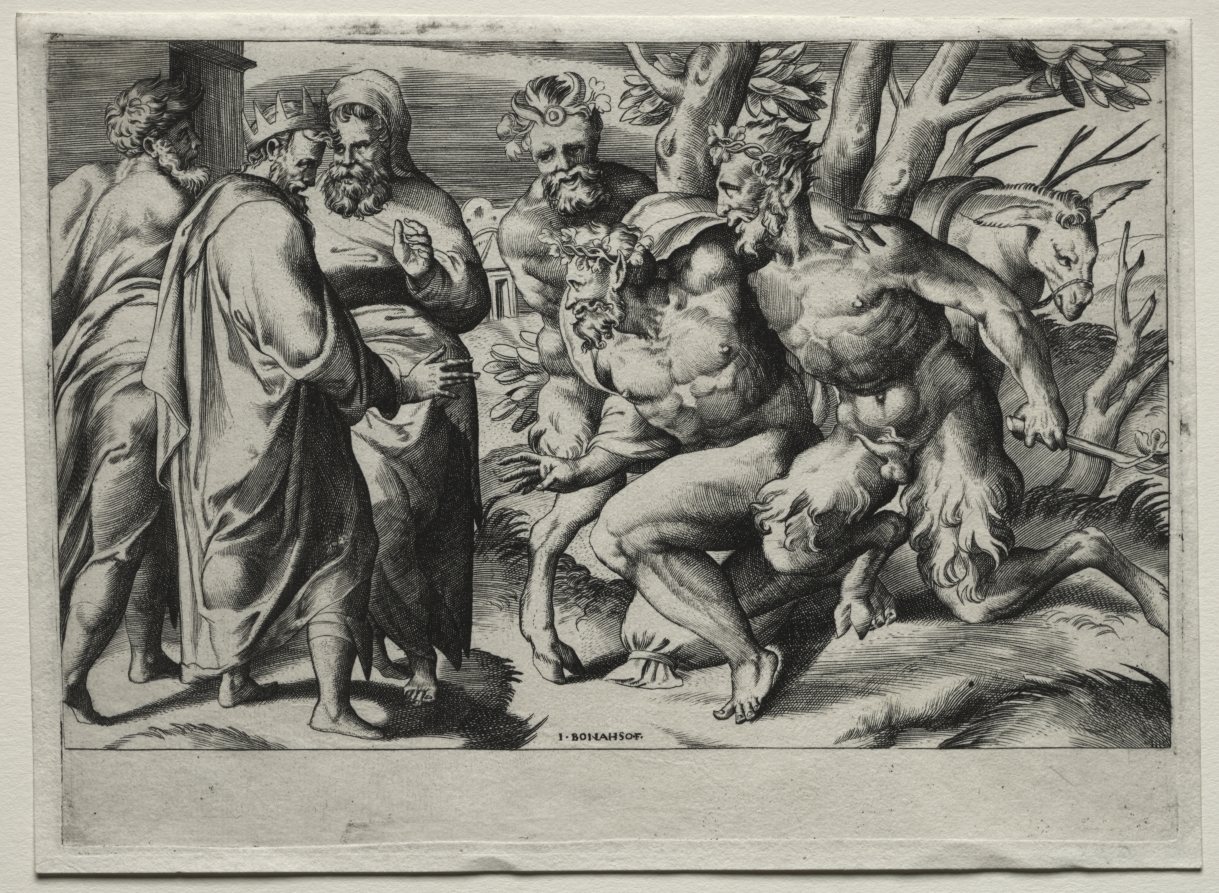
Silenus and King Midas (mid-1500s) is in the Cleveland Museum of Art collection. The museum's creator attribution is Giulio Bonasone (Italian, c. 1510–after 1576); Perino del Vaga (Italian, 1501–1547).
The work and its context
The museum's open-access catalogue describes the work:
In Greek mythology Silenus was an old, drunken satyr (half-man, half-goat), who visited King Midas and was graciously received. In gratitude for Midas's generous hospitality, Dionysus, the god of wine and former pupil of Silenus, granted the king one wish. Midas asked for the power to turn everything that he touched into gold. However, he soon regretted his choice, for he was unable to eat food or drink water, as they also turned to gold. Finally, Dionysus released him from the enchantment.
Object facts
- Title: Silenus and King Midas
- Date: mid-1500s
- Creator attribution: Giulio Bonasone (Italian, c. 1510–after 1576); Perino del Vaga (Italian, 1501–1547)
- Culture: Italy
- Type: Print
- Technique: engraving
- Dimensions: Sheet: 16.9 x 22.9 cm (6 5/8 x 9 in.); Platemark: 15.9 x 21.9 cm (6 1/4 x 8 5/8 in.)
- Collection: PR - Engraving
- Department: Prints
- Accession number: 1968.256
Collection credit
Mr. and Mrs. Charles G. Prasse Collection
View the collection record
See the museum's photographs and full catalogue entry. Catalogue text is reproduced from the Cleveland Museum of Art's open-access data, with HTML formatting removed. This object and its supplied image are designated CC0.
Sources
More in Lifestyle
Keep reading