Silk hanging with embroidered tree of life (1800s): Art, History and Details
Silk hanging with embroidered tree of life at the Cleveland Museum of Art: 1800s, Silk: plain weave; embroidery, chain stitch. Explore the work's context, creator attribution and collection history.
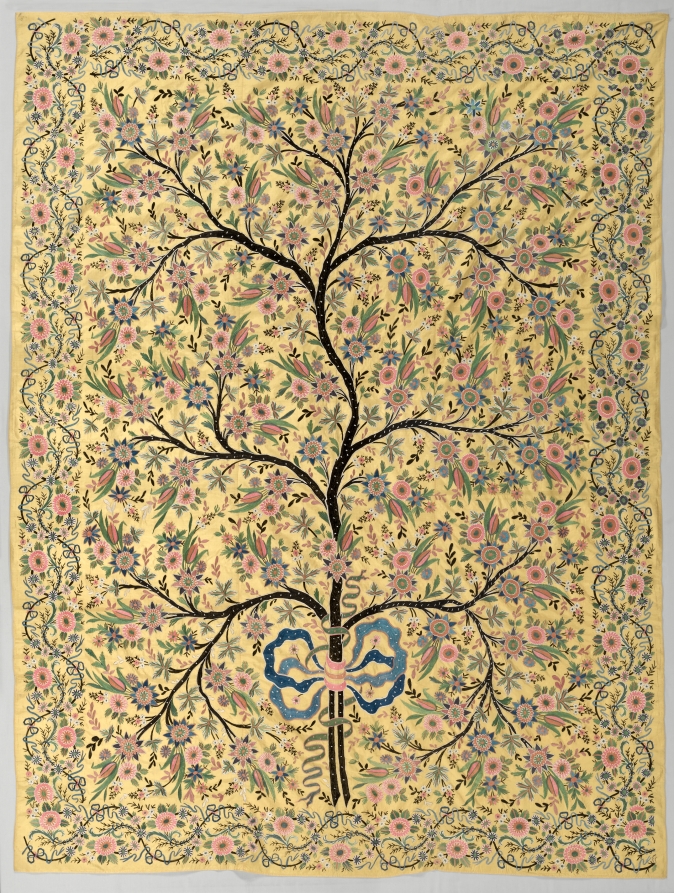
Silk hanging with embroidered tree of life (1800s) is in the Cleveland Museum of Art collection.
The work and its context
The museum's open-access catalogue describes the work:
This resplendent tree of life embroidery integrates Turkish traditions with new European styles that became increasingly fashionable during the mid-18th century. The fanciful tree projects lavish bouquets of Turkish flowers while the tree trunk is wrapped with an elaborate European-style bow, as are the meandering vines in the floral border. A professional draftsman drew the pattern with ink on the radiant yellow silk taffeta embroidered with at least 12 vibrant colors in chain stitch. It was most likely made in a professional workshop as a hanging for special occasions, a conspicuous symbol of beauty and wealth.
Object facts
- Title: Silk hanging with embroidered tree of life
- Date: 1800s
- Culture: Turkey, Ottoman period
- Type: Embroidery
- Technique: Silk: plain weave; embroidery, chain stitch
- Dimensions: Average: 228.6 x 172.7 cm (90 x 68 in.)
- Collection: T - Islamic
- Department: Textiles
- Accession number: 1916.1358
Collection credit
Gift of Mr. and Mrs. J. H. Wade
Further reading listed by the museum
- Mackie, Louise. "Luxuriance." Cleveland Art: Cleveland Museum of Art Members Magazine 53, no. 4 (July/August 2013): 12-14.
- Mackie, Louise W. Symbols of Power: Luxury Textiles from Islamic Lands, 7th-21st Century. Cleveland; New Haven: Cleveland Museum of Art; Yale University Press, 2015.
- Highet, Juliet. "Silks from Islamic Lands." The Asian Art Newspaper: Monthly for Collectors, Dealers, Museums and Galleries 17, issue 5 (March 2014):16-18.
View the collection record
See the museum's photographs and full catalogue entry. Catalogue text is reproduced from the Cleveland Museum of Art's open-access data, with HTML formatting removed. This object and its supplied image are designated CC0.
Sources
More in Lifestyle
Keep reading