Skyphos (1–100 CE): Art, History and Details
Skyphos at the Cleveland Museum of Art: 1–100 CE, earthenware with slip decoration. Explore the work's context, creator attribution and collection history.
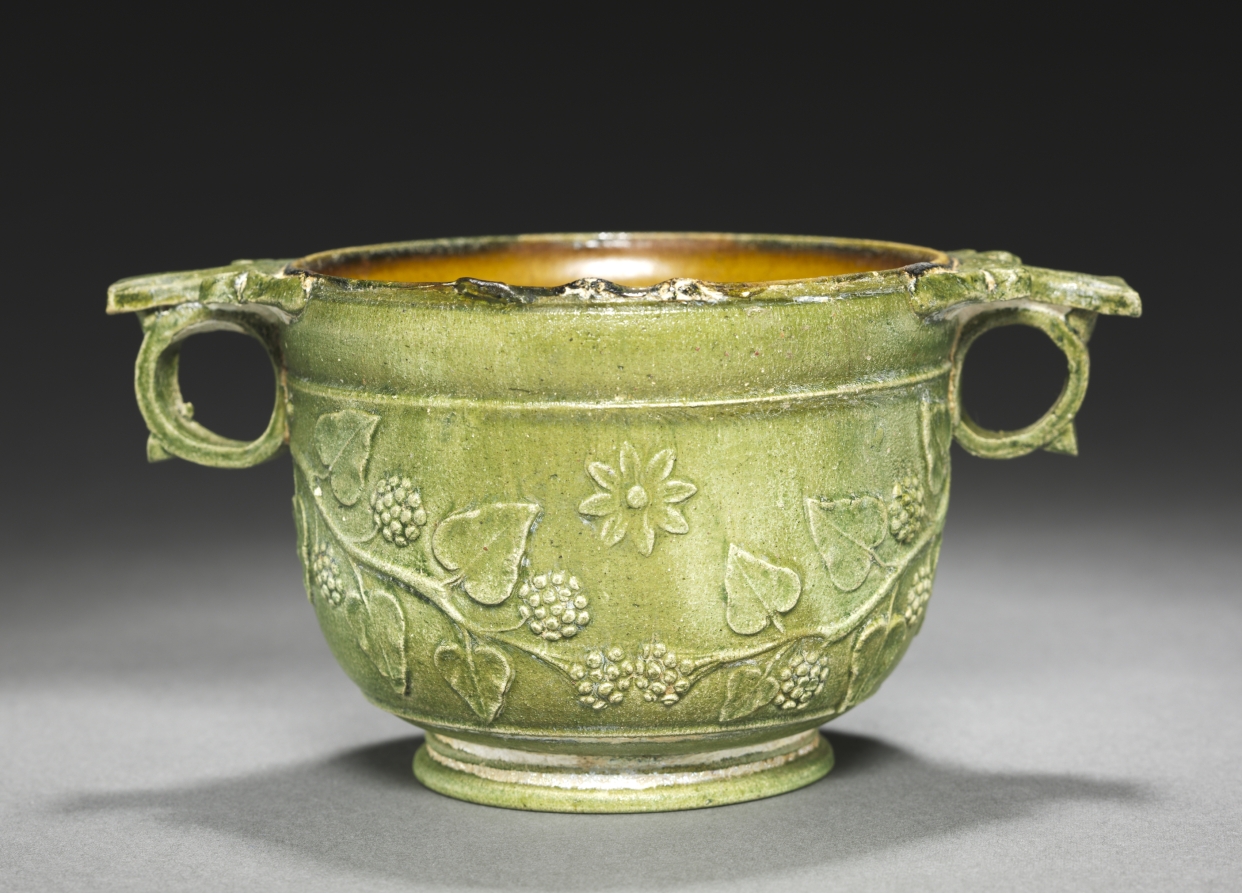
Skyphos (1–100 CE) is in the Cleveland Museum of Art collection.
The work and its context
The museum's open-access catalogue describes the work:
Lead glaze was first used near the Mediterranean basin around 1000 bc, appearing in Mesopotamia and Egypt almost simultaneously. The technique flourished during the Roman Empire, and examples can be found in all reaches of the realm from England and Germany to North Africa, Syria, and Turkey, and perhaps even further east. This is a very fine example of this technique.
Object facts
- Title: Skyphos
- Date: 1–100 CE
- Culture: probably Turkey, Roman
- Type: Ceramic
- Technique: earthenware with slip decoration
- Dimensions: Overall: 8.4 x 16.3 x 10.9 cm (3 5/16 x 6 7/16 x 4 5/16 in.)
- Collection: GR - Roman
- Department: Greek and Roman Art
- Accession number: 1989.149
A detail from the museum
Lead glaze is what gives this wine cup its yellowish-green color.
Collection credit
John L. Severance Fund
View the collection record
See the museum's photographs and full catalogue entry. Catalogue text is reproduced from the Cleveland Museum of Art's open-access data, with HTML formatting removed. This object and its supplied image are designated CC0.
Sources
More in Lifestyle
Keep reading