Slendang (Shoulder Cloth) (1800s-early 1900s): Art, History and Details
Slendang (Shoulder Cloth) at the Cleveland Museum of Art: 1800s-early 1900s, tabby weave, batik; silk. Explore the work's context, creator attribution and collection history.
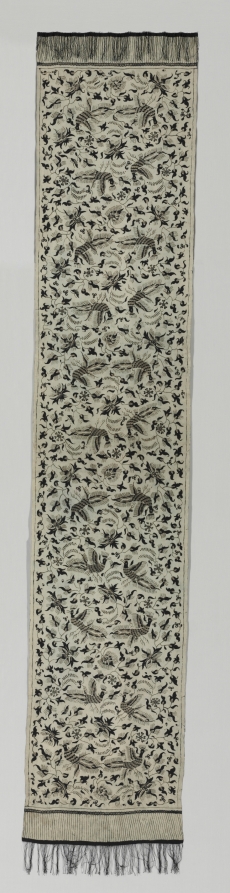
Slendang (Shoulder Cloth) (1800s-early 1900s) is in the Cleveland Museum of Art collection.
The work and its context
The museum's open-access catalogue describes the work:
Chinese people living in the coastal cities of northern Java made and traded silk batiks like this one. The silk was imported from China, and the motifs were always Chinese. The "luk wan" bird, a variation of the Chinese phoenix that occurs on this shoulder cloth, was one of the most common motifs on silk batiks, as is the greenish color of the background. The striped border was meant to simulate fringe even though each end is actually finished with fringe. Silk batiks were made for export, particularly to Bali where they were worn at festivals by wealthy people.
Object facts
- Title: Slendang (Shoulder Cloth)
- Date: 1800s-early 1900s
- Culture: Indonesia, Java, North Coast, 19th - early 20th century
- Type: Textile
- Technique: tabby weave, batik; silk
- Dimensions: Overall: 284.4 x 55.9 cm (111 15/16 x 22 in.)
- Collection: Textiles
- Department: Textiles
- Accession number: 1929.136
Collection credit
Sundry Purchase Fund
View the collection record
See the museum's photographs and full catalogue entry. Catalogue text is reproduced from the Cleveland Museum of Art's open-access data, with HTML formatting removed. This object and its supplied image are designated CC0.
Sources
More in Lifestyle
Keep reading