Snuff Box (c. 1770): Art, History and Details
Snuff Box at the Cleveland Museum of Art: c. 1770, enamel on copper, gilt metal. Explore the work's context, creator attribution and collection history.
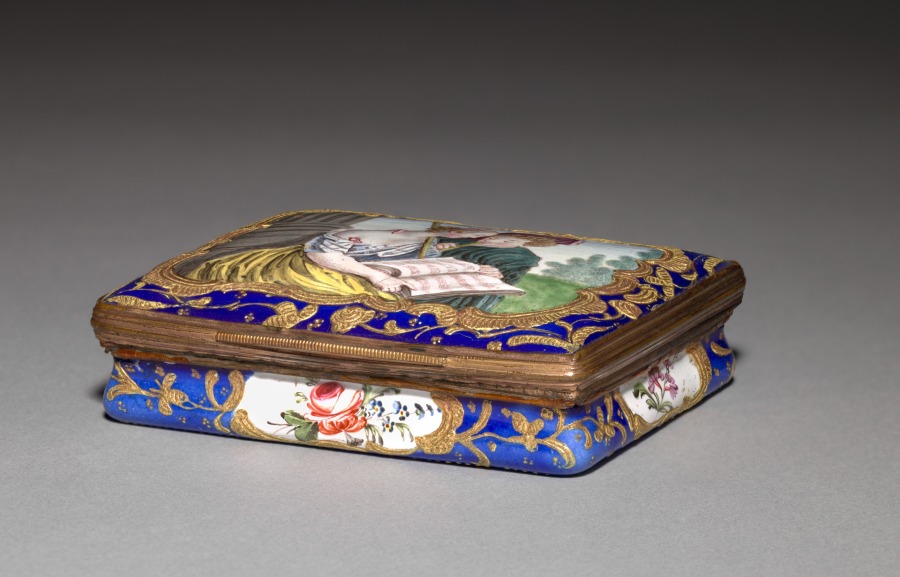
Snuff Box (c. 1770) is in the Cleveland Museum of Art collection.
The work and its context
The museum's open-access catalogue describes the work:
Luxurious personal objects, like this snuff box, were an essential part of a privileged wardrobe during the 1700s and early 1800s, emphasizing their owner’s refinement and wealth. Their glittering surfaces, however, disguised a system based on the labor and suffering of enslaved or indentured people, whether in gold or stone mines, tobacco farms, or shops where these goods were made. Like cotton, sugar, and tea, snuff came from British colonies in America, India, and the Caribbean, where enslaved people were exploited to grow these crops under extremely harsh conditions. Slavery was not abolished in much of the British Empire until 1833. Britain and other European nations continued to pursue colonialism with a sense of superiority that found its way into all aspects of life, including decorative objects glorifying their conquests.
Object facts
- Title: Snuff Box
- Date: c. 1770
- Culture: England, South Staffordshire
- Type: Miscellaneous
- Technique: enamel on copper, gilt metal
- Dimensions: Overall: 2.3 x 7 x 5.5 cm (7/8 x 2 3/4 x 2 3/16 in.)
- Collection: Decorative Arts
- Department: Decorative Art and Design
- Accession number: 1916.617
A detail from the museum
This small, elaborate box held snuff, a form of powdered tobacco that was inhaled in tiny amounts.
Collection credit
Gift of Mr. and Mrs. J. H. Wade
View the collection record
See the museum's photographs and full catalogue entry. Catalogue text is reproduced from the Cleveland Museum of Art's open-access data, with HTML formatting removed. This object and its supplied image are designated CC0.
Sources
More in Lifestyle
Keep reading