Snuff Box (Tabatière) (1777–78): Art, History and Details
Snuff Box (Tabatière) at the Cleveland Museum of Art: 1777–78, gold and enamel. Explore the work's context, creator attribution and collection history.
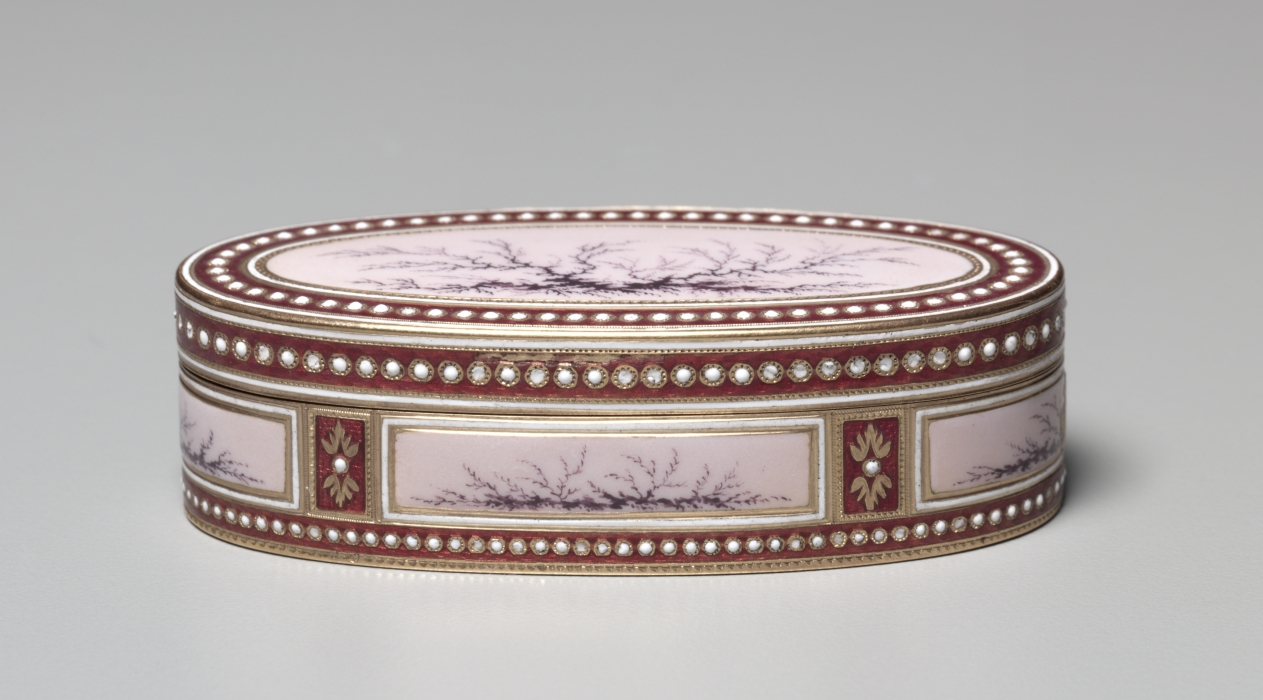
Snuff Box (Tabatière) (1777–78) is in the Cleveland Museum of Art collection. The museum's creator attribution is Charles Le Bastier (French).
The work and its context
The museum's open-access catalogue describes the work:
This box’s black and white design imitates a rare type of agate patterned with black veins that look like the branches of a tree or aquatic plant. Enamel that simulated agate was popular around 1775–80, evoking an 18th-century French interest in natural curiosities, mineralogy, and botany. Charles Le Bastier himself made at least seven boxes using this motif between 1775 and 1779.
Object facts
- Title: Snuff Box (Tabatière)
- Date: 1777–78
- Creator attribution: Charles Le Bastier (French)
- Culture: France
- Type: Enamel
- Technique: gold and enamel
- Dimensions: Overall: 2 x 3.4 cm (13/16 x 1 5/16 in.)
- Collection: Decorative Arts
- Department: Decorative Art and Design
- Accession number: 1957.406
A detail from the museum
Not only did the design of a snuff box carry important social and political implications, proper snuff taking etiquette, outlined in 18th-century publications, also communicated status.
Collection credit
Gift of Mrs. Edward B. Greene
View the collection record
See the museum's photographs and full catalogue entry. Catalogue text is reproduced from the Cleveland Museum of Art's open-access data, with HTML formatting removed. This object and its supplied image are designated CC0.
Sources
More in Lifestyle
Keep reading