Snuff Container (1800s-1900s): Art, History and Details
Snuff Container at the Cleveland Museum of Art: 1800s-1900s, Horn and wood. Explore the work's context, creator attribution and collection history.
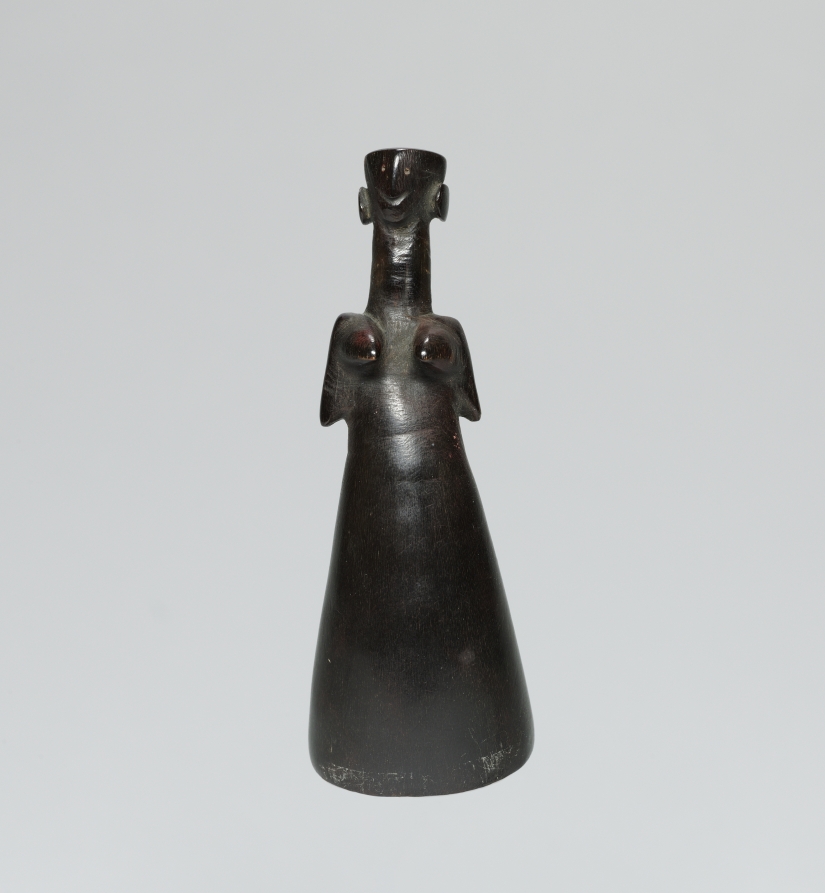
Snuff Container (1800s-1900s) is in the Cleveland Museum of Art collection.
The work and its context
The museum's open-access catalogue describes the work:
This snuff container in the form of a human (female) figure was carved from cattle horn. The form of the image follows the curve of the horn, with arms and hands held to the chest. Despite its smallish size and minimalist execution, this object demonstrates considerable expressive power. Cattle had special meaning for the pastoralist peoples of southern Africa in that it stood for the wealth and status of the individual and the group. However, similar to the ideas associated with tobacco and snuff, cattle also referred to the world of the ancestors. Snuff containers like this one had great significance for their owners and users.
Object facts
- Title: Snuff Container
- Date: 1800s-1900s
- Culture: Africa, Southern Africa, Lesotho, South Sotho maker
- Type: Vessels
- Technique: Horn and wood
- Dimensions: Overall: 10.3 x 4 x 3.5 cm (4 1/16 x 1 9/16 x 1 3/8 in.)
- Collection: African Art
- Department: African Art
- Accession number: 2010.202
A detail from the museum
The tobacco product snuff was stored in decorative, yet useful, containers like this one.
Collection credit
Leonard C. Hanna Jr. Fund
Further reading listed by the museum
- Petridis, Constatine. "The Art of Daily Life: Portable Objects from Southeast Africa. " Tribal Art. (Summer 2011). Pg. 66, Fig. 2.
- Cleveland Museum of Art. The CMA Companion: A Guide to the Cleveland Museum of Art. Cleveland: Cleveland Museum of Art, 2014.
- Rondeau, James, Constantijn Petridis, Yaëlle Biro, Herbert M. Cole, Kassim Kone, Babatunde Lawal, Wilfried Van Damme, and Susan Mullin Vogel. The language of beauty in African art. 2022.
View the collection record
See the museum's photographs and full catalogue entry. Catalogue text is reproduced from the Cleveland Museum of Art's open-access data, with HTML formatting removed. This object and its supplied image are designated CC0.
Sources
More in Lifestyle
Keep reading