Sōjō Henjō (c. 1766): Art, History and Details
Sōjō Henjō at the Cleveland Museum of Art: c. 1766, color woodblock print. Explore the work's context, creator attribution and collection history.
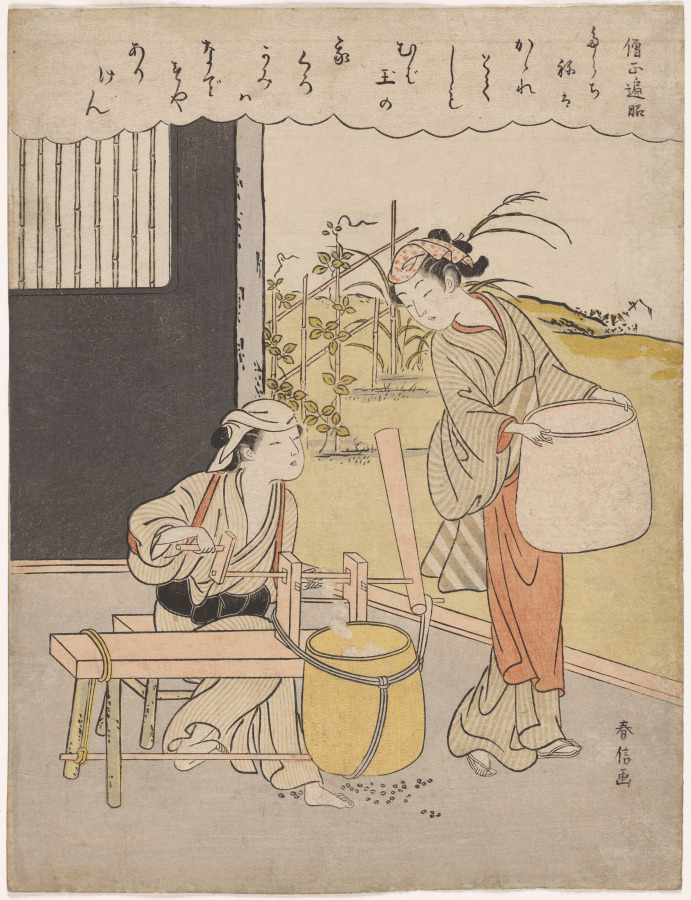
Sōjō Henjō (c. 1766) is in the Cleveland Museum of Art collection. The museum's creator attribution is Suzuki Harunobu (Japanese, 1724–1770).
The work and its context
The museum's open-access catalogue describes the work:
Two young women are ginning cotton. One runs the machine that separates the seeds from the fibers, while the other stands by with a basket full of cotton. Above them is a poem written by a Japanese Buddhist monk. The poem turns on the image of the monk’s black hair being cut when he entered the priesthood, comparing it to the color of lily seeds. In the print, cotton seeds take their place.
Object facts
- Title: Sōjō Henjō
- Date: c. 1766
- Creator attribution: Suzuki Harunobu (Japanese, 1724–1770)
- Culture: Japan, Edo period (1615–1868)
- Type: Print
- Technique: color woodblock print
- Collection: ASIAN - Album leaf
- Department: Japanese Art
- Accession number: 2026.47
A detail from the museum
Sōjō is a rank in the Buddhist clergy of Japan and is often translated as “bishop.”
Collection credit
The Kelvin Smith Collection, given by Ellen and Bruce Mavec
View the collection record
See the museum's photographs and full catalogue entry. Catalogue text is reproduced from the Cleveland Museum of Art's open-access data, with HTML formatting removed. This object and its supplied image are designated CC0.
Sources
More in Lifestyle
Keep reading
Related stories