Sphinx (c. 500 BCE): Art, History and Details
Sphinx at the Cleveland Museum of Art: c. 500 BCE, amber. Explore the work's context, creator attribution and collection history.
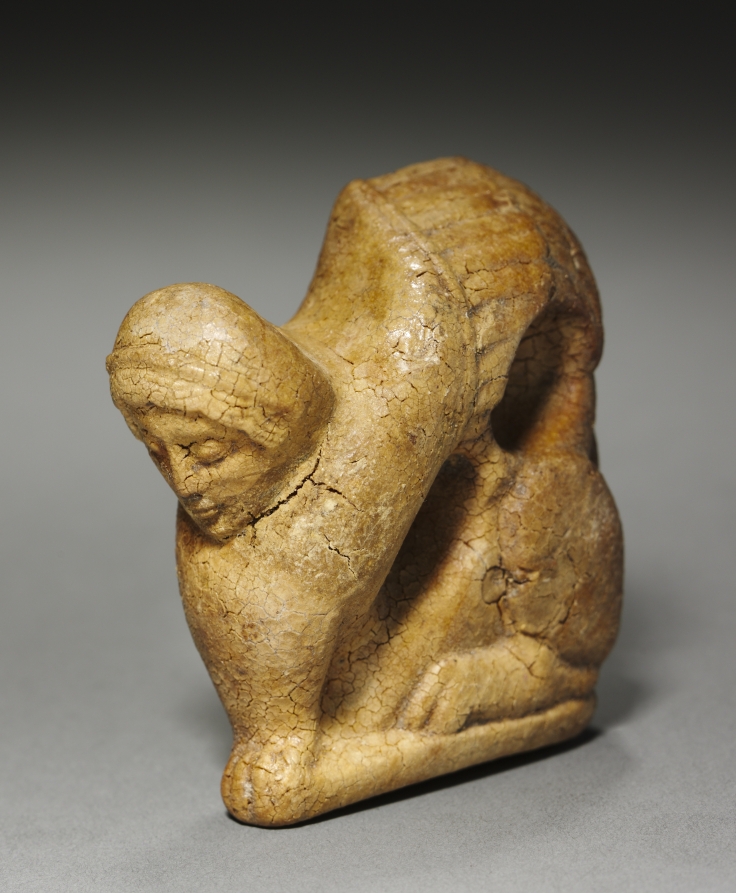
Sphinx (c. 500 BCE) is in the Cleveland Museum of Art collection.
The work and its context
The museum's open-access catalogue describes the work:
Amber, a form of fossilized tree resin, was much prized in the ancient Mediterranean world, perhaps due to its mysterious luminosity, fragrance, and magnetism. It was often carved into figures or heads of humans, animals, or mythical creatures. Small perforations on this sphinx suggest that it may once have been mounted, perhaps for use as a pendant. Although now opaque and crackled due to age, in antiquity the surface probably exhibited some degree of translucence, a valued attribute for amulets and ornaments.
Object facts
- Title: Sphinx
- Date: c. 500 BCE
- Culture: Greek/South Italian, Taranto
- Type: Sculpture
- Technique: amber
- Dimensions: Overall: 5.8 x 2.3 cm (2 5/16 x 7/8 in.)
- Collection: GR - Greek
- Department: Greek and Roman Art
- Accession number: 1985.49
A detail from the museum
A sphinx combines the body of a winged lion with the head of a woman.
Collection credit
Purchase from the J. H. Wade Fund
View the collection record
See the museum's photographs and full catalogue entry. Catalogue text is reproduced from the Cleveland Museum of Art's open-access data, with HTML formatting removed. This object and its supplied image are designated CC0.
Sources
More in Lifestyle
Keep reading