Spray of Flowers (c. 1774–1800): Art, History and Details
Spray of Flowers at the Cleveland Museum of Art: c. 1774–1800, crayon manner etching. Explore the work's context, creator attribution and collection history.
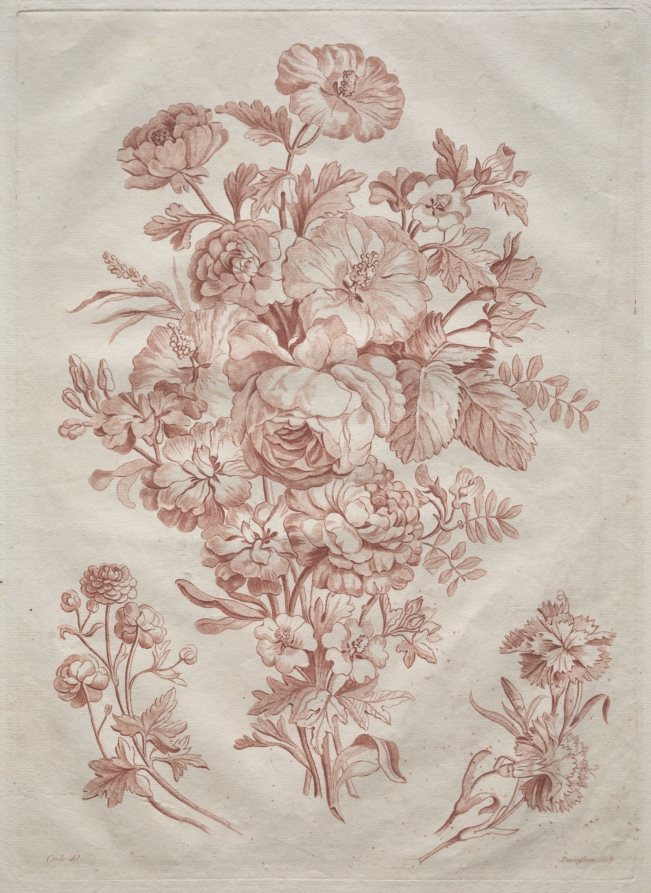
Spray of Flowers (c. 1774–1800) is in the Cleveland Museum of Art collection. The museum's creator attribution is Roubillac (French, 1739-).
The work and its context
The museum's open-access catalogue describes the work:
Crayon manner etching was invented in the 18th century to simulate the texture of chalk drawings, which were very popular at the time. A tool with toothed points of varying thicknesses set at irregular intervals and angles (mattoir) imitated the random character of grains of chalk on textured paper. Etudes de fleurs d’après nature demonstrates how prints propagated floral designs that could be used in the applied arts. Artisans designing textiles or decorating furniture, for instance, were inspired by the compositions found on prints.
Object facts
- Title: Spray of Flowers
- Date: c. 1774–1800
- Creator attribution: Roubillac (French, 1739-)
- Culture: France
- Type: Print
- Technique: crayon manner etching
- Collection: PR - Etching
- Department: Prints
- Accession number: 1955.476
Collection credit
Gift of The Print Club of Cleveland in honor of Mrs. William G. Mather
View the collection record
See the museum's photographs and full catalogue entry. Catalogue text is reproduced from the Cleveland Museum of Art's open-access data, with HTML formatting removed. This object and its supplied image are designated CC0.
Sources
More in Lifestyle
Keep reading