Sri Nathaji (c. 1900): Art, History and Details
Sri Nathaji at the Cleveland Museum of Art: c. 1900, Gum tempera on paper. Explore the work's context, creator attribution and collection history.
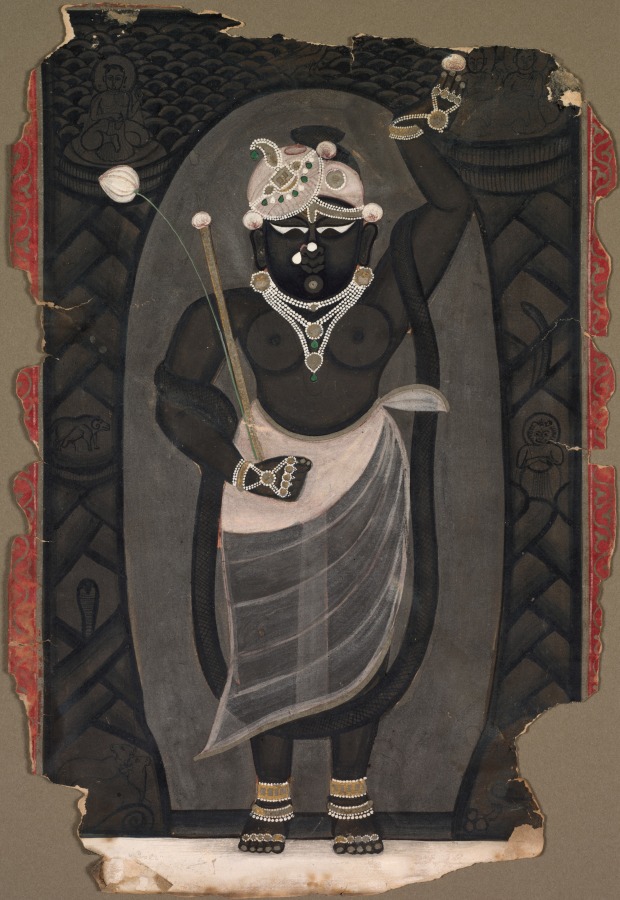
Sri Nathaji (c. 1900) is in the Cleveland Museum of Art collection.
The work and its context
The museum's open-access catalogue describes the work:
This painted depiction of the black stone sculpture regarded by followers of the Pushti Marg sect as Shri Nathji, a living embodiment of Krishna, includes all the elements carved into the monolithic stele behind the figure. Snakes, beasts, and yogis occupy a wild, rocky landscape. Priests have dressed the figure in light garments, indicative of a hot season, and applied a turban, jewelry, and eyes, which look down upon devotees who would be worshiping at his feet. This painting probably stood on a domestic shrine for daily devotions and served as a memento of a pilgrimage to Nathdwara.
Object facts
- Title: Sri Nathaji
- Date: c. 1900
- Culture: Northwestern India, Rajasthan, Rajput Kingdom of Kota
- Type: Painting
- Technique: Gum tempera on paper
- Dimensions: Overall: 24.5 x 17.2 cm (9 5/8 x 6 3/4 in.)
- Collection: Indian Art
- Department: Indian and Southeast Asian Art
- Accession number: 2001.162
Collection credit
Gift of William E. Ward in memory of his wife, Evelyn Svec Ward
View the collection record
See the museum's photographs and full catalogue entry. Catalogue text is reproduced from the Cleveland Museum of Art's open-access data, with HTML formatting removed. This object and its supplied image are designated CC0.
Sources
More in Lifestyle
Keep reading