St. Jerome Seated near a Pollard Willow (1512): Art, History and Details
St. Jerome Seated near a Pollard Willow at the Cleveland Museum of Art: 1512, drypoint. Explore the work's context, creator attribution and collection history.
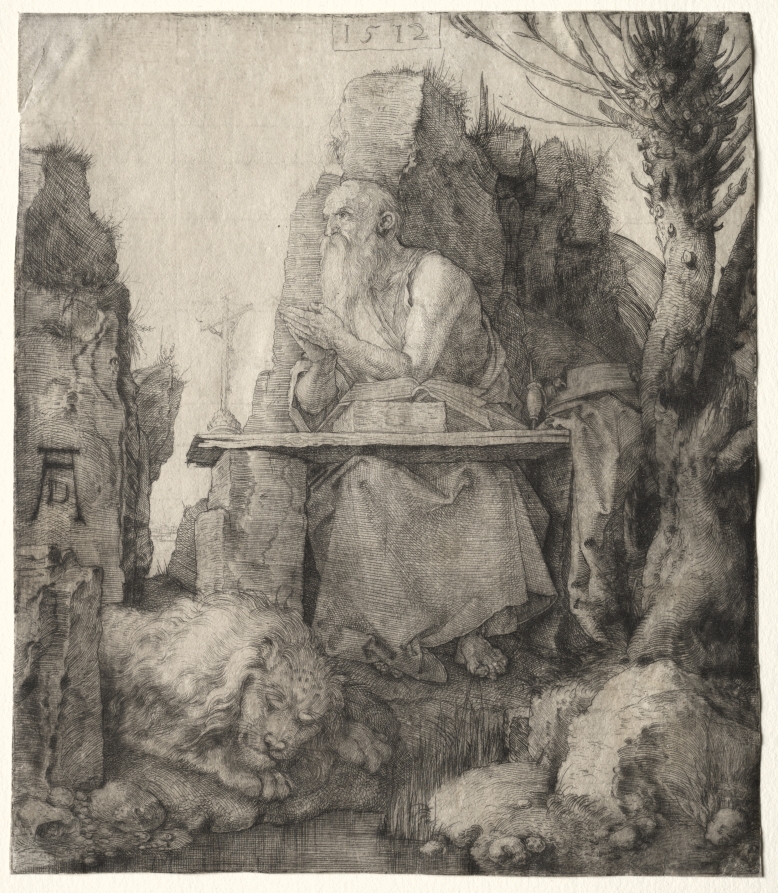
St. Jerome Seated near a Pollard Willow (1512) is in the Cleveland Museum of Art collection. The museum's creator attribution is Albrecht Dürer (German, 1471–1528).
The work and its context
The museum's open-access catalogue describes the work:
Of the hundreds of prints Albrecht Dürer made, only three were drypoints, in which a needle scratched directly into a copperplate creates velvety, fuzzy lines. In this image of Saint Jerome, Dürer exploited these qualities of drypoint to manifest the natural, spiritual realm of the saint’s hermitage in the wilderness. Jerome pauses from his studies to pray in a setting that buzzes with life. The saint’s isolation and communion with Christ result in spiritual rebirth, symbolized by the bumpy pollard (trimmed) willow, cut to generate new growth.
Object facts
- Title: St. Jerome Seated near a Pollard Willow
- Date: 1512
- Creator attribution: Albrecht Dürer (German, 1471–1528)
- Culture: Germany
- Type: Print
- Technique: drypoint
- Dimensions: Image: 20.7 x 18.1 cm (8 1/8 x 7 1/8 in.); Sheet: 20.7 x 18.1 cm (8 1/8 x 7 1/8 in.)
- Collection: PR - Drypoint
- Department: Prints
- Accession number: 1925.72
A detail from the museum
This is one of only three prints Albrecht Dürer made using drypoint, in which a needle is scratched directly into the copperplate.
Collection credit
Gift of Ralph King
Further reading listed by the museum
- Michelozzi, Maurizio, "A New State for Dürer's "St. Jerome by the Pollard Willow," Print Quarterly Vol. 24, No. 3 (September 2007): pp. 254-269.
View the collection record
See the museum's photographs and full catalogue entry. Catalogue text is reproduced from the Cleveland Museum of Art's open-access data, with HTML formatting removed. This object and its supplied image are designated CC0.
Sources
More in Lifestyle
Keep reading