St. John on the Island of Patmos (c. 1545–55): Art, History and Details
St. John on the Island of Patmos at the Cleveland Museum of Art: c. 1545–55, woodcut. Explore the work's context, creator attribution and collection history.
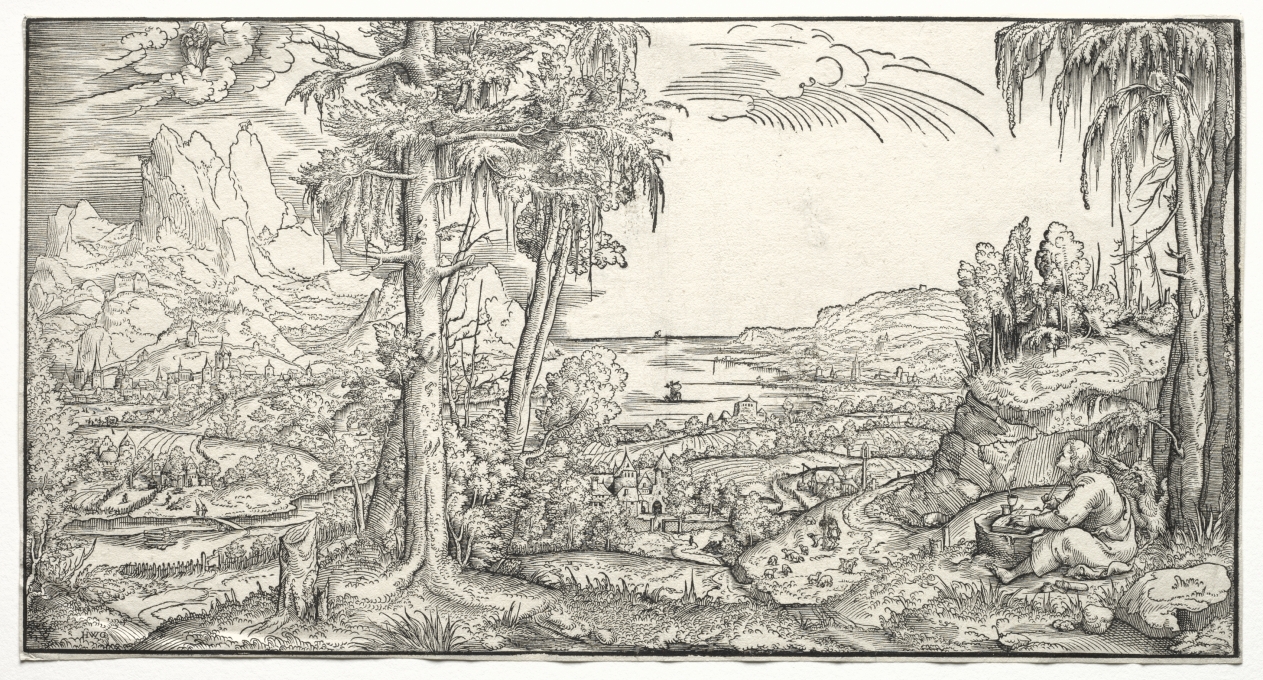
St. John on the Island of Patmos (c. 1545–55) is in the Cleveland Museum of Art collection. The museum's creator attribution is Virgil Solis (German, 1514–1562).
The work and its context
The museum's open-access catalogue describes the work:
Christian tradition says that after Christ’s death, John the Evangelist was exiled to the Aegean island Patmos, where he composed the Book of Revelation based on a series of prophetic visions. Here, Saint John gazes upward toward a vision of the woman of the apocalypse (traditionally interpreted as the Virgin Mary) in the top left corner. The artist’s composition implies that John’s vision was partially inspired by his isolation within nature—portrayed in a wide expanse featuring dramatic peaks and fir trees, castles, farms, shepherds, and even a merchant’s ship on a vast harbor.
Object facts
- Title: St. John on the Island of Patmos
- Date: c. 1545–55
- Creator attribution: Virgil Solis (German, 1514–1562)
- Culture: Germany
- Type: Print
- Technique: woodcut
- Dimensions: Image: 19.8 x 37.3 cm (7 13/16 x 14 11/16 in.); Sheet: 19.8 x 37.3 cm (7 13/16 x 14 11/16 in.)
- Collection: PR - Woodcut
- Department: Prints
- Accession number: 1954.565
A detail from the museum
In this setting intended to be the Greek island of Patmos, the saint sits among northern European trees and towns, and even a northern ship on the harbor.
Collection credit
John L. Severance Fund
View the collection record
See the museum's photographs and full catalogue entry. Catalogue text is reproduced from the Cleveland Museum of Art's open-access data, with HTML formatting removed. This object and its supplied image are designated CC0.
Sources
More in Lifestyle
Keep reading