Standing Buddha (c. 800s): Art, History and Details
Standing Buddha at the Cleveland Museum of Art: c. 800s, Kaolin. Explore the work's context, creator attribution and collection history.
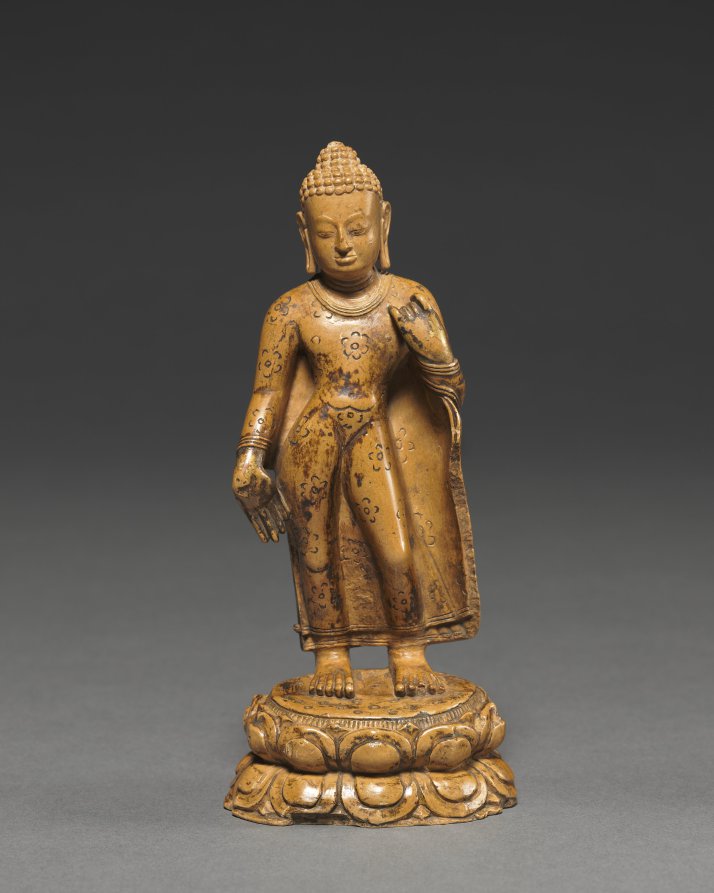
Standing Buddha (c. 800s) is in the Cleveland Museum of Art collection.
The work and its context
The museum's open-access catalogue describes the work:
This small sculpture was probably part of a set of eight main scenes from the life of the Buddha, each identified by a specific hand gesture. When the standing Buddha gestures down with his right hand, with the palm facing out, he usually signals his miraculous descent from the Heaven of the Thirty-three Gods, where he once spent a monsoon season giving teachings to his mother. She died shortly after his birth and was reborn in the heaven.
Object facts
- Title: Standing Buddha
- Date: c. 800s
- Culture: Burma (Myanmar)
- Type: Sculpture
- Technique: Kaolin
- Dimensions: Overall: 13.9 cm (5 1/2 in.)
- Collection: Burmese Art
- Department: Indian and Southeast Asian Art
- Accession number: 1973.159
A detail from the museum
The robe is covered with flowers on the front and back, possibly alluding to the flowers falling from heaven as the Buddha descended back to earth.
Collection credit
Purchase from the J. H. Wade Fund
Further reading listed by the museum
- "The Year in Review for 1973." The Bulletin of the Cleveland Museum of Art 61, no. 2 (February 1974): 31-78.
View the collection record
See the museum's photographs and full catalogue entry. Catalogue text is reproduced from the Cleveland Museum of Art's open-access data, with HTML formatting removed. This object and its supplied image are designated CC0.
Sources
More in Lifestyle
Keep reading