Standing Figure (c. 900–400 BCE): Art, History and Details
Standing Figure at the Cleveland Museum of Art: c. 900–400 BCE, serpentine. Explore the work's context, creator attribution and collection history.
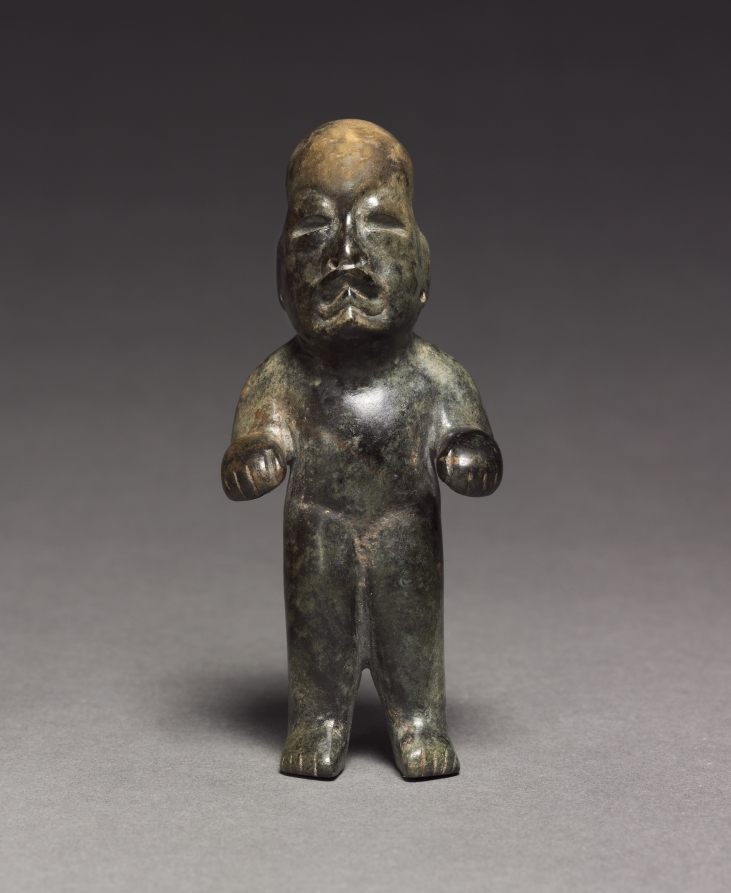
Standing Figure (c. 900–400 BCE) is in the Cleveland Museum of Art collection.
The work and its context
The museum's open-access catalogue describes the work:
The Olmec were Mesoamerica's greatest lapidaries; their work in jade and serpentine was prized by both contemporary and later Mesoamerican cultures. Human beings were jaguar traits (such as the downturned mouth and paw-like hands of this figurine) are common in Olmec art. Such creatures were probably believed to possess supernatural powers.
Object facts
- Title: Standing Figure
- Date: c. 900–400 BCE
- Culture: Mesoamerica, Mexico, Olmec
- Type: Sculpture
- Technique: serpentine
- Dimensions: Overall: 10.6 x 4.5 x 2.5 cm (4 3/16 x 1 3/4 x 1 in.)
- Collection: AA - Mesoamerica
- Department: Art of the Americas
- Accession number: 1990.219
Collection credit
Gift of Mr. and Mrs. James C. Gruener
Further reading listed by the museum
- Von Winning, Hasso, and Alfred Stendahl. Pre-Columbian Art of Mexico and Central America: Text and Notes by Hasso Von Winning. Selection of Plates by Alfred Stendahl. New York: H.N. Abrams, 1968.
- Young-Sãnchez, Margaret. "The Gruener Collection of Pre-Columbian Art." The Bulletin of the Cleveland Museum of Art 79, no. 7 (1992): 234-75.
View the collection record
See the museum's photographs and full catalogue entry. Catalogue text is reproduced from the Cleveland Museum of Art's open-access data, with HTML formatting removed. This object and its supplied image are designated CC0.
Sources
More in Lifestyle
Keep reading