Standing Figurine (200 BCE–300 CE): Art, History and Details
Standing Figurine at the Cleveland Museum of Art: 200 BCE–300 CE, ceramic. Explore the work's context, creator attribution and collection history.
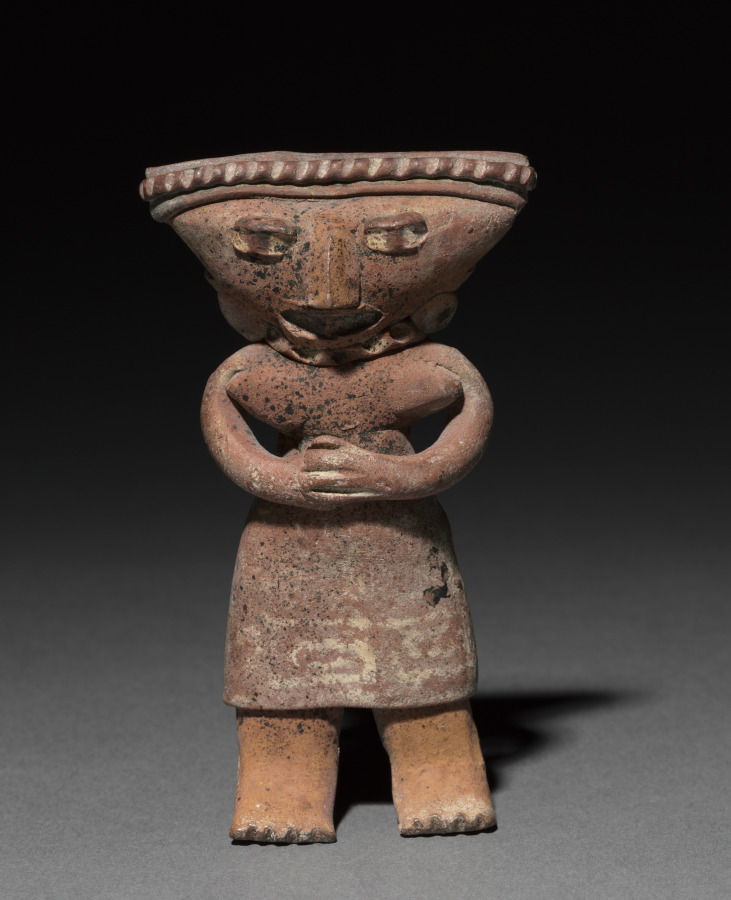
Standing Figurine (200 BCE–300 CE) is in the Cleveland Museum of Art collection.
The work and its context
The museum's open-access catalogue describes the work:
Clay figurines were the earliest and most common art form in Mexico and other countries in the ancient Mesoamerican (Middle American) culture region. Made first by hand and later with molds, most figurines belong to the traditions of commoners, such as farmers, rather than those of elites.
Object facts
- Title: Standing Figurine
- Date: 200 BCE–300 CE
- Culture: Mesoamerica, West Mexico, Michoacán
- Type: Ceramic
- Technique: ceramic
- Dimensions: Overall: 11 x 6.7 cm (4 5/16 x 2 5/8 in.)
- Collection: AA - Mesoamerica
- Department: Art of the Americas
- Accession number: 2008.20
A detail from the museum
Clay figurines were the earliest and most common art form in the ancient Mesoamerican culture region.
Collection credit
Gift of Clara Taplin Rankin
View the collection record
See the museum's photographs and full catalogue entry. Catalogue text is reproduced from the Cleveland Museum of Art's open-access data, with HTML formatting removed. This object and its supplied image are designated CC0.
Sources
More in Lifestyle
Keep reading