Stater: Pegasos (obverse); Head of Athena (reverse) (c. 350–338 BCE): Art, History and Details
Stater: Pegasos (obverse); Head of Athena (reverse) at the Cleveland Museum of Art: c. 350–338 BCE, silver. Explore the work's context, creator attribution and collection history.
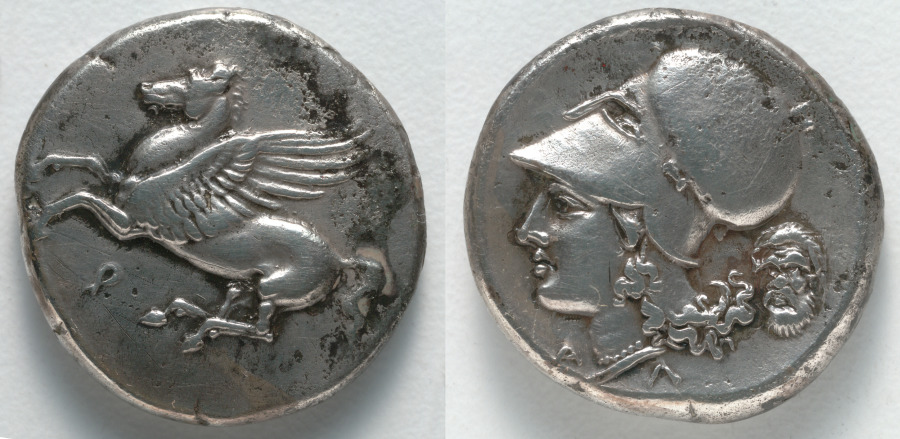
Stater: Pegasos (obverse); Head of Athena (reverse) (c. 350–338 BCE) is in the Cleveland Museum of Art collection.
The work and its context
The museum's open-access catalogue describes the work:
On the obverse of this coin, the divine winged horse Pegasos takes flight, its front legs rearing up to the left. On the reverse, Athena, who gave the Corinthian hero Bellerophon the reins to tame Pegasos, wears a Corinthian-style helmet and is accompanied by a mask of the satyr-god Silenos. Repeated in this coinage, the story of Pegasos became an integral part of Corinthian mythology.
Object facts
- Title: Stater: Pegasos (obverse); Head of Athena (reverse)
- Date: c. 350–338 BCE
- Culture: Greece, Corinth
- Type: Coins
- Technique: silver
- Dimensions: Diameter: 2.1 cm (13/16 in.)
- Collection: GR - Greek
- Department: Greek and Roman Art
- Accession number: 1916.984
A detail from the museum
The archaic letter Ϙ, koppa, on the obverse abbreviates the early spelling of Corinth (ϘΟΡΙΝΘΟΣ).
Collection credit
Gift of J. H. Wade
View the collection record
See the museum's photographs and full catalogue entry. Catalogue text is reproduced from the Cleveland Museum of Art's open-access data, with HTML formatting removed. This object and its supplied image are designated CC0.
Sources
More in Lifestyle
Keep reading