Statuette of a Horse (750–700 BCE): Art, History and Details
Statuette of a Horse at the Cleveland Museum of Art: 750–700 BCE, bronze. Explore the work's context, creator attribution and collection history.
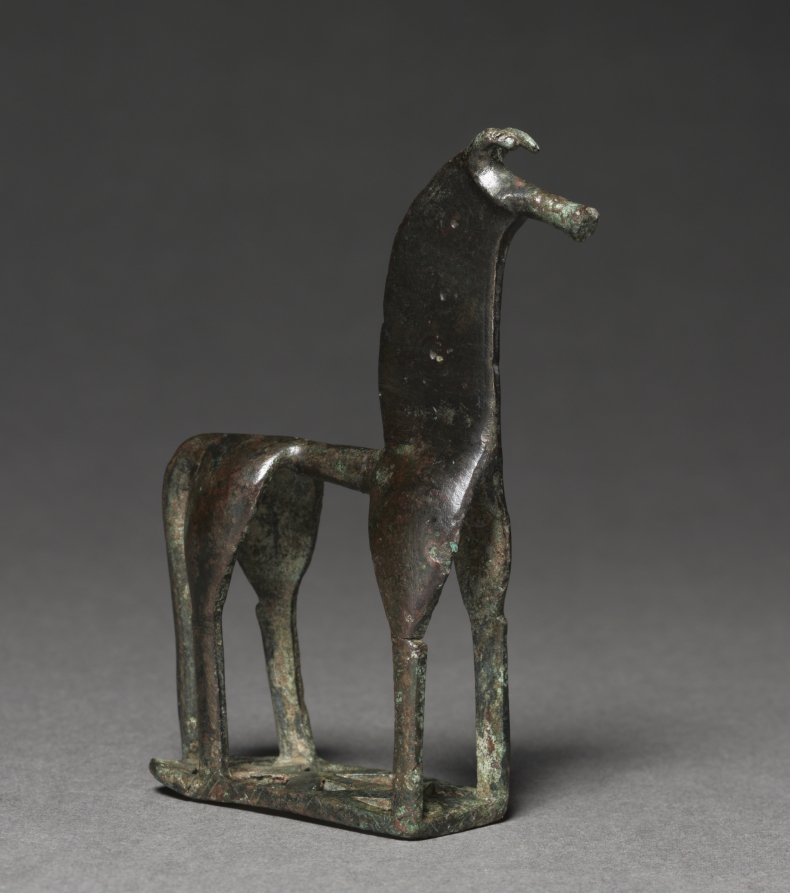
Statuette of a Horse (750–700 BCE) is in the Cleveland Museum of Art collection.
The work and its context
The museum's open-access catalogue describes the work:
Cast using the lost-wax process, this bronze horse with perforated stand is conceived in profile, its balanced and stylized forms designed for clarity and legibility. Among thousands of bronze animal figurines produced across the Greek world in the Geometric period, this example stands out for its intact condition and large size. Although lacking a known findspot, its form suggests that it may have been produced in a Corinthian workshop.
Object facts
- Title: Statuette of a Horse
- Date: 750–700 BCE
- Culture: Greek, Geometric, probably Corinthian
- Type: Sculpture
- Technique: bronze
- Dimensions: Overall: 11.5 x 10 x 2.6 cm (4 1/2 x 3 15/16 x 1 in.)
- Collection: GR - Greek
- Department: Greek and Roman Art
- Accession number: 1998.173
A detail from the museum
The triangular perforations in this statuette’s base give an impression of translucence, perhaps alluding to water.
Collection credit
John L. Severance Fund
Further reading listed by the museum
- Cleveland Museum of Art, “New Cleveland Indian Arrives at the CMA,” November 27, 1998, Cleveland Museum of Art Archives.
- Perkins, Larry David. Intimate Rituals and Personal Devotions: Spiritual Art Through the Ages. Gainesville, Fla: University of Florida, Samuel P. Harn Museum of Art, 2000.
- Cleveland Museum of Art. The CMA Companion: A Guide to the Cleveland Museum of Art. Cleveland: Cleveland Museum of Art, 2014.
View the collection record
See the museum's photographs and full catalogue entry. Catalogue text is reproduced from the Cleveland Museum of Art's open-access data, with HTML formatting removed. This object and its supplied image are designated CC0.
Sources
More in Lifestyle
Keep reading