Statuette of a Lion (380–246 BCE): Art, History and Details
Statuette of a Lion at the Cleveland Museum of Art: 380–246 BCE, limestone. Explore the work's context, creator attribution and collection history.
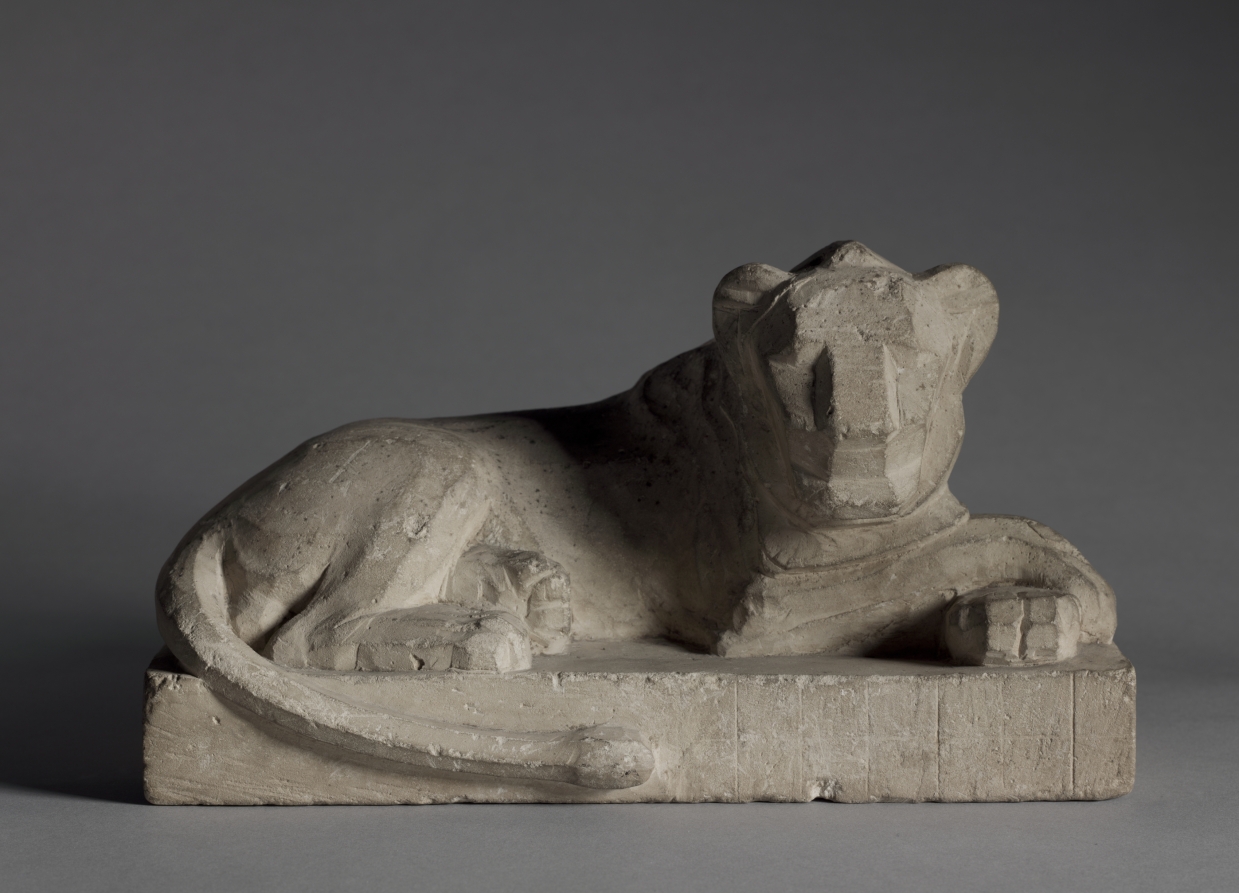
Statuette of a Lion (380–246 BCE) is in the Cleveland Museum of Art collection.
The work and its context
The museum's open-access catalogue describes the work:
Lions in Egyptian art are usually shown prone and relaxed, and usually represent the king. But this statuette probably represents the lion god Mahes who had a great temple at Leontopolis ("Lion-City") in the Delta where lions were kept. We know from classical authors that the temple maintained musicians to play to the lions to calm their nerves.
Object facts
- Title: Statuette of a Lion
- Date: 380–246 BCE
- Culture: Egypt, Late period (715–332 BCE), Dynasty 30
- Type: Sculpture
- Technique: limestone
- Dimensions: Overall: 13.8 x 12 cm (5 7/16 x 4 3/4 in.)
- Collection: Egypt - Late Period
- Department: Egyptian and Ancient Near Eastern Art
- Accession number: 1920.2001
A detail from the museum
In antiquity, lions were often associated with rulers and this miniature sculpture likely depicts the Egyptian lion god Mahes. In ancient Egypt, a special city known as Leontopolis, or "Lion-City," had a temple dedicated to this deity in which live lions were kept. This small limestone sculpture would have been at home in such a location.
Collection credit
Gift of the John Huntington Art and Polytechnic Trust
Further reading listed by the museum
- University of Missouri--Columbia. Egyptian Art Under the Greeks and Romans, 332 B.C. to A.D. 330: Museum of Art and Archaeology, University of Missouri-Columbia, September 26-November 15, 1987. Columbia, Mo: Museum of Art and Archaeology, University of Missouri-Columbia, 1987.
- Berman, Lawrence M., and Kenneth J. Bohač. Catalogue of Egyptian Art: The Cleveland Museum of Art. Cleveland, OH: Cleveland Museum of Art, 1999
View the collection record
See the museum's photographs and full catalogue entry. Catalogue text is reproduced from the Cleveland Museum of Art's open-access data, with HTML formatting removed. This object and its supplied image are designated CC0.
Sources
More in Lifestyle
Keep reading