Statuette of a Man (c. 1859–1648 BCE): Art, History and Details
Statuette of a Man at the Cleveland Museum of Art: c. 1859–1648 BCE, painted limestone. Explore the work's context, creator attribution and collection history.
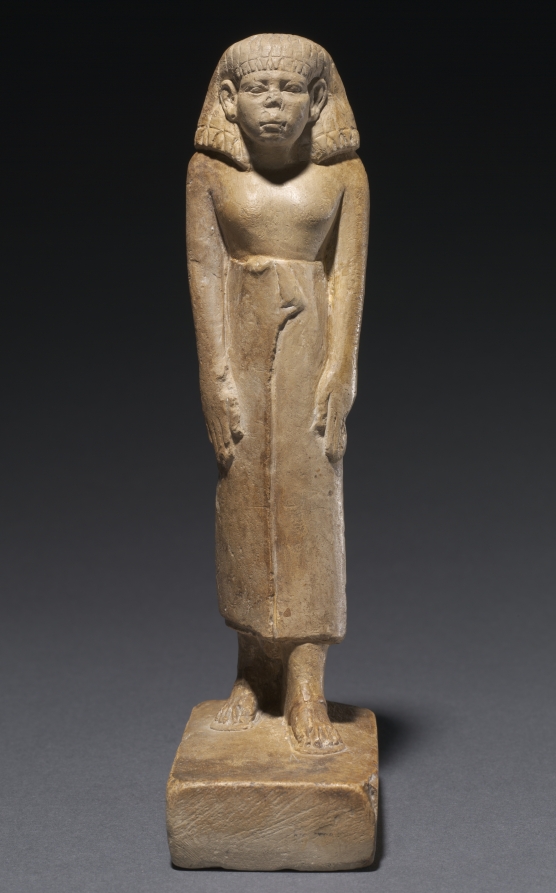
Statuette of a Man (c. 1859–1648 BCE) is in the Cleveland Museum of Art collection.
The work and its context
The museum's open-access catalogue describes the work:
This statuette is an example of the art of the Middle Kingdon in Egypt, which was characterized by tight, compact forms. The man represented here has his arms tucked close to his body and his shoulders raised to his wig. He is tightly wrapped in a long skirt with his feet barely separated. His posture and expression are tense and serious, reflecting the sobriety of this period in Egyptian art.
Object facts
- Title: Statuette of a Man
- Date: c. 1859–1648 BCE
- Culture: Egypt, Middle Kingdom (2040–1648 BCE), Dynasty 12, reign of Amenemhat III (1860–1814 BCE) or later
- Type: Sculpture
- Technique: painted limestone
- Dimensions: Overall: 18 x 4.5 x 8.6 cm (7 1/16 x 1 3/4 x 3 3/8 in.)
- Collection: Egypt - Middle Kingdom
- Department: Egyptian and Ancient Near Eastern Art
- Accession number: 1985.136
A detail from the museum
This figure has traces of white, red, and black pigment.
Collection credit
John L. Severance Fund
Further reading listed by the museum
- Turner, Evan H. “The Year in Review for 1985.” The Bulletin of the Cleveland Museum of Art 73, no. 2 (February 1986): 26–71.
- Berman, Lawrence M., and Kenneth J. Bohač. Catalogue of Egyptian Art: The Cleveland Museum of Art. Cleveland, OH: Cleveland Museum of Art, 1999
View the collection record
See the museum's photographs and full catalogue entry. Catalogue text is reproduced from the Cleveland Museum of Art's open-access data, with HTML formatting removed. This object and its supplied image are designated CC0.
Sources
More in Lifestyle
Keep reading