Stone Panel for Royal Tomb (late 700s–early 800s): Art, History and Details
Stone Panel for Royal Tomb at the Cleveland Museum of Art: late 700s–early 800s, granite. Explore the work's context, creator attribution and collection history.
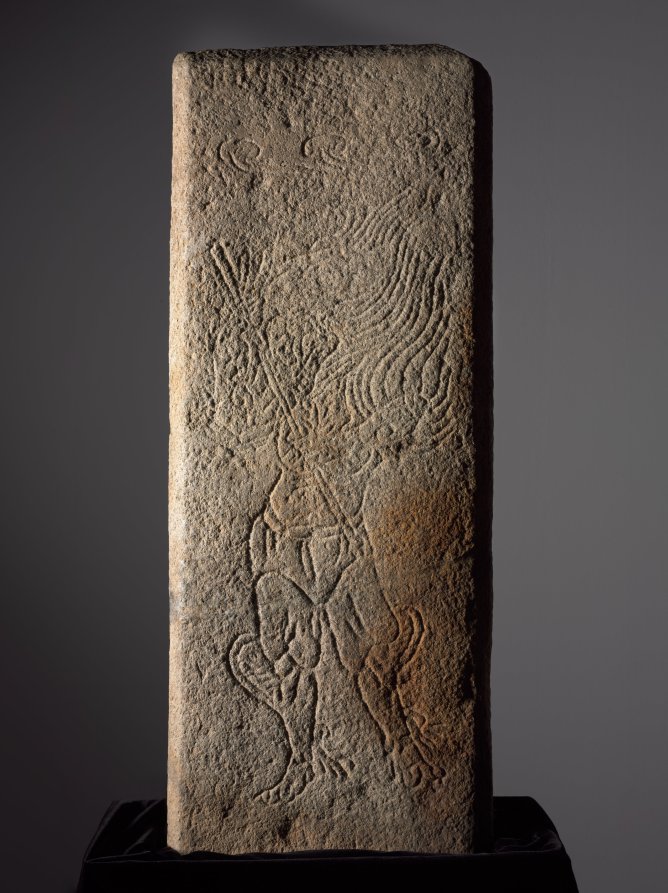
Stone Panel for Royal Tomb (late 700s–early 800s) is in the Cleveland Museum of Art collection.
The work and its context
The museum's open-access catalogue describes the work:
This panel shows a figure with a human body and the features of a rat, which is one of the signs of the Asian zodiac, and is likely one of 12 granite panels from a royal tomb. It is probably from Gyeongju—the capital of the kingdoms of the Silla (57 BCE–668) and Unified Silla (688–935) periods—where large royal tomb mounds can still be found. This panel resembles those showing the animal signs of the Korean zodiac from the tomb of General Kim Yusin (595–673) in Gyeongju, the most famous tomb of the period.
Object facts
- Title: Stone Panel for Royal Tomb
- Date: late 700s–early 800s
- Culture: Korea, Unified Silla period (676–935)
- Type: Sculpture
- Technique: granite
- Dimensions: Overall: 147.3 x 45.3 cm (58 x 17 13/16 in.)
- Collection: Korean Art
- Department: Korean Art
- Accession number: 1988.249
A detail from the museum
A rat, one of the signs of the East Asian zodiac, carved in this stone panel symbolizes wealth.
Collection credit
Gift of The Honorable Joseph P. Carroll and Roberta Carroll, M.D. in memory of Mr. Gregory Henderson
Further reading listed by the museum
- “The Year in Review for 1988.” The Bulletin of the Cleveland Museum of Art, vol. 76, no. 2, 1989, pp. 30–75.
- Kim, Young-Sung. "The Changing Process of Shillas Royal Mausoleums of the Twelve Zodiac Animal signs Stone Circle [신라 십이지신장상 호석 능묘의 변천]." Sogang Journal of Early Korean History 11 (August 2012): 115–154.
- Lee, Soyoung, and Denise Patry Leidy. Silla: Korea's Golden Kingdom. New York: The Metropolitan Museum of Art, 2013.
View the collection record
See the museum's photographs and full catalogue entry. Catalogue text is reproduced from the Cleveland Museum of Art's open-access data, with HTML formatting removed. This object and its supplied image are designated CC0.
Sources
More in Lifestyle
Keep reading