Storage Jar (late 1100s): Art, History and Details
Storage Jar at the Cleveland Museum of Art: late 1100s, Stoneware with natural ash glaze (Tokoname ware). Explore the work's context, creator attribution and collection history.
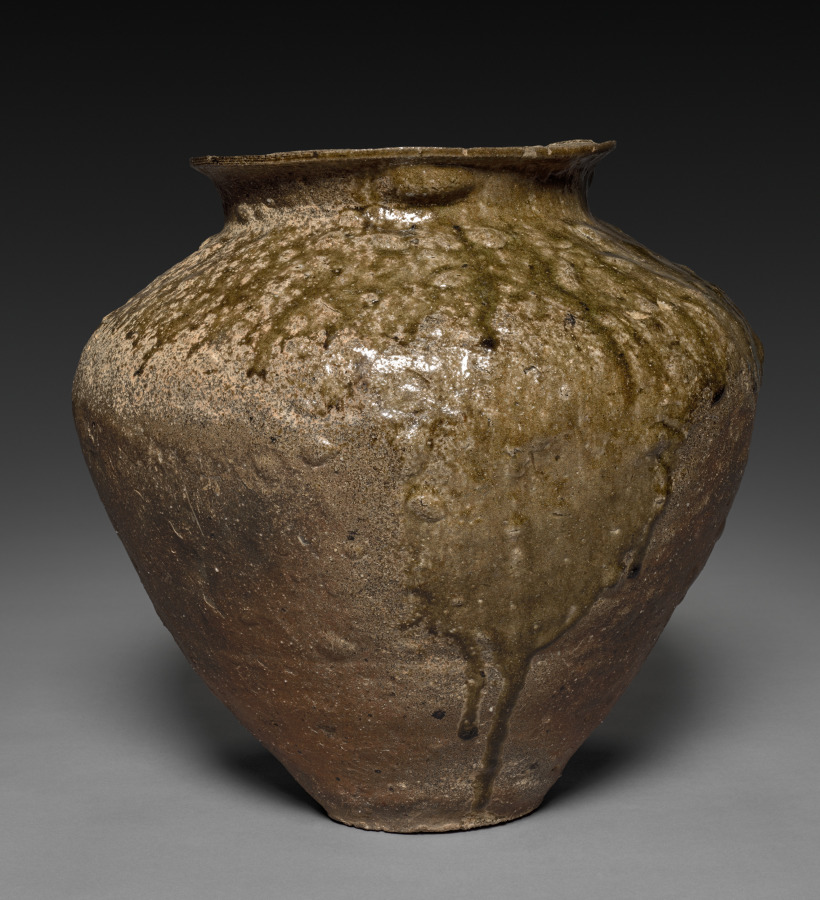
Storage Jar (late 1100s) is in the Cleveland Museum of Art collection.
The work and its context
The museum's open-access catalogue describes the work:
Tokoname, located on Ise Bay in present-day Aichi prefecture on Japan’s main island, Honshu, was the largest center of ceramic production in medieval Japan. It had been an active center of ceramic production since the Heian period (794–1185). Wide-mouthed jars like this one are called kame, and were favored for use in tea practice.
Object facts
- Title: Storage Jar
- Date: late 1100s
- Culture: Japan, Kamakura period (1185–1333)
- Type: Ceramic
- Technique: Stoneware with natural ash glaze (Tokoname ware)
- Dimensions: Diameter: 38.2 cm (15 1/16 in.); Overall: 37 cm (14 9/16 in.)
- Collection: Japanese Art
- Department: Japanese Art
- Accession number: 2015.495
Collection credit
Gift from the Collection of George Gund III
View the collection record
See the museum's photographs and full catalogue entry. Catalogue text is reproduced from the Cleveland Museum of Art's open-access data, with HTML formatting removed. This object and its supplied image are designated CC0.
Sources
More in Lifestyle
Keep reading