Study after Nature (c. 1853–55): Art, History and Details
Study after Nature at the Cleveland Museum of Art: c. 1853–55, waxed salt print from waxed paper negative. Explore the work's context, creator attribution and collection history.
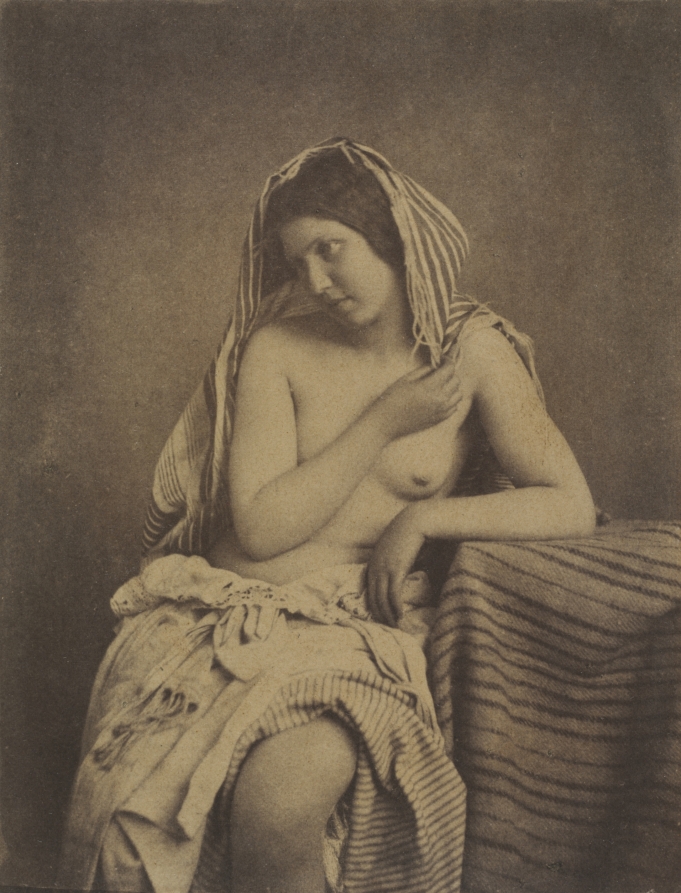
Study after Nature (c. 1853–55) is in the Cleveland Museum of Art collection. The museum's creator attribution is Julien Vallou de Villeneuve (French, 1795–1866).
The work and its context
The museum's open-access catalogue describes the work:
In the early 1850s, despite protests from moralists, photographs of nudes (known as académies) were discreetly produced under the guise of "artist's studies." Among those most skilled at making such studies was Julien Vallou de Villeneuve. A successful painter and lithographer during the 1820s and 1830s before turning to photography in the early 1840s, he created a new repertoire of poses for artists to use as compositional aids. Among his clients was the French realist painter Gustave Courbet (1819–1877).
Object facts
- Title: Study after Nature
- Date: c. 1853–55
- Creator attribution: Julien Vallou de Villeneuve (French, 1795–1866)
- Culture: France, 19th century
- Type: Photograph
- Technique: waxed salt print from waxed paper negative
- Dimensions: Image: 16.1 x 12.2 cm (6 5/16 x 4 13/16 in.); Matted: 45.7 x 35.6 cm (18 x 14 in.)
- Collection: PH - French 19th Century
- Department: Photography
- Accession number: 1993.163
Collection credit
Dudley P. Allen Fund
Further reading listed by the museum
- "1993 Annual Report." The Bulletin of the Cleveland Museum of Art 81, no. 6 (1994): 143-218.
- Cleveland Museum of Art, Tom E Hinson. Catalogue of Photography. Cleveland, OH: Cleveland Museum of Art, 1996.
View the collection record
See the museum's photographs and full catalogue entry. Catalogue text is reproduced from the Cleveland Museum of Art's open-access data, with HTML formatting removed. This object and its supplied image are designated CC0.
Sources
More in Lifestyle
Keep reading