Sultan and Musicians (c. 1650): Art, History and Details
Sultan and Musicians at the Cleveland Museum of Art: c. 1650, Gum tempera and gold on paper. Explore the work's context, creator attribution and collection history.
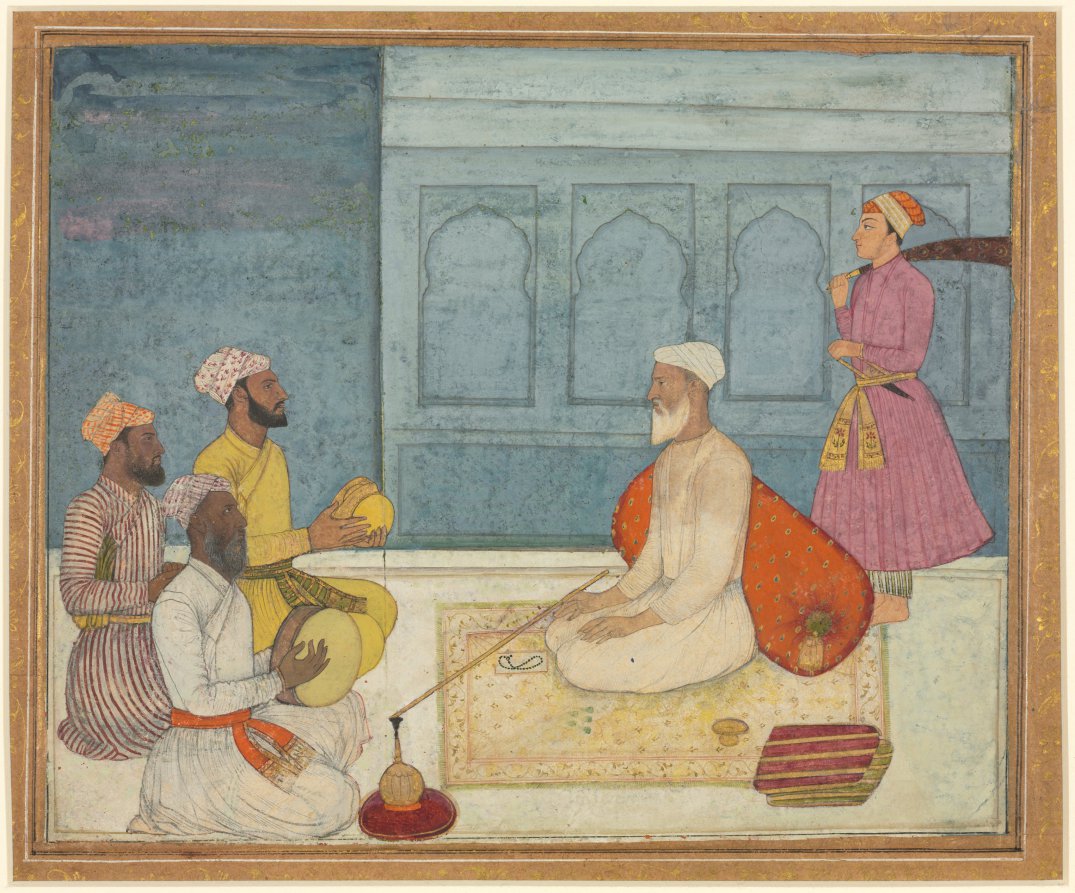
Sultan and Musicians (c. 1650) is in the Cleveland Museum of Art collection.
The work and its context
The museum's open-access catalogue describes the work:
The tone-on-tone pale mustard-yellow carpet and orange floor cushion furnish the terrace with a seat of honor for the figure dressed in white. The peacock-feather whisk held by an attendant behind him is an emblem of his royal status. Lying conspicuously before his knees, Muslim prayer beads mark him as a man of piety. He also partakes in courtly pleasures of hookah smoking and paan chewing. Green triangular paan packets consist of betel nut, lime, and flavorful aromatics such as cinnamon or coconut, wrapped in betel leaf. A brass spittoon by his side would be used for spitting throughout the enjoyable process of chewing the packets.
Object facts
- Title: Sultan and Musicians
- Date: c. 1650
- Culture: Mughal India, Deccan
- Type: Painting
- Technique: Gum tempera and gold on paper
- Dimensions: Image: 16.9 x 20.4 cm (6 5/8 x 8 1/16 in.); Border: 20.3 x 23.6 cm (8 x 9 5/16 in.)
- Collection: Indian Art - Mughal
- Department: Indian and Southeast Asian Art
- Accession number: 2012.300
A detail from the museum
The two singers with open mouths may be performing a work by a mystic of the Sufi branch of Islam, given the essential role of music in Sufism and the pious mood of the all-male gathering.
Collection credit
Gift of Dr. Norman Zaworski
View the collection record
See the museum's photographs and full catalogue entry. Catalogue text is reproduced from the Cleveland Museum of Art's open-access data, with HTML formatting removed. This object and its supplied image are designated CC0.
Sources
More in Lifestyle
Keep reading