Swedish Plate Money (Half Daler) (1731): Art, History and Details
Swedish Plate Money (Half Daler) at the Cleveland Museum of Art: 1731, copper. Explore the work's context, creator attribution and collection history.
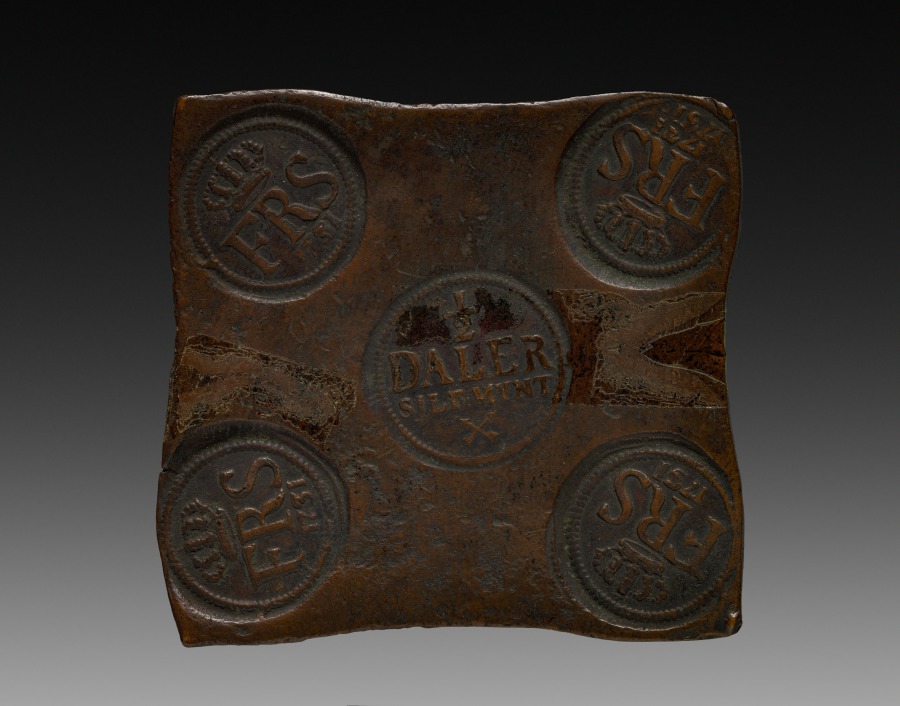
Swedish Plate Money (Half Daler) (1731) is in the Cleveland Museum of Art collection.
The work and its context
The museum's open-access catalogue describes the work:
Some monetary denominations in Sweden were issued in large plates of copper and silver because the ores were plentiful. However, by the late 1770s these plates were considered too cumbersome, and consequently, Sweden began issuing some of Europe's first denominations in paper money.
Object facts
- Title: Swedish Plate Money (Half Daler)
- Date: 1731
- Type: Metalwork
- Technique: copper
- Dimensions: Overall: 9.6 x 9.9 cm (3 3/4 x 3 7/8 in.)
- Collection: Decorative Arts
- Department: Decorative Art and Design
- Accession number: 1916.763
A detail from the museum
This plate was worth a half daler, which was the standard unit of currency in Sweden in the 18th century.
Collection credit
Gift of Mr. and Mrs. J. H. Wade
View the collection record
See the museum's photographs and full catalogue entry. Catalogue text is reproduced from the Cleveland Museum of Art's open-access data, with HTML formatting removed. This object and its supplied image are designated CC0.
Sources
More in Lifestyle
Keep reading


