Tampan Pasisir (Ship Cloth) (1800s): Art, History and Details
Tampan Pasisir (Ship Cloth) at the Cleveland Museum of Art: 1800s, tabby weave with supplementary weft; cotton. Explore the work's context, creator attribution and collection history.
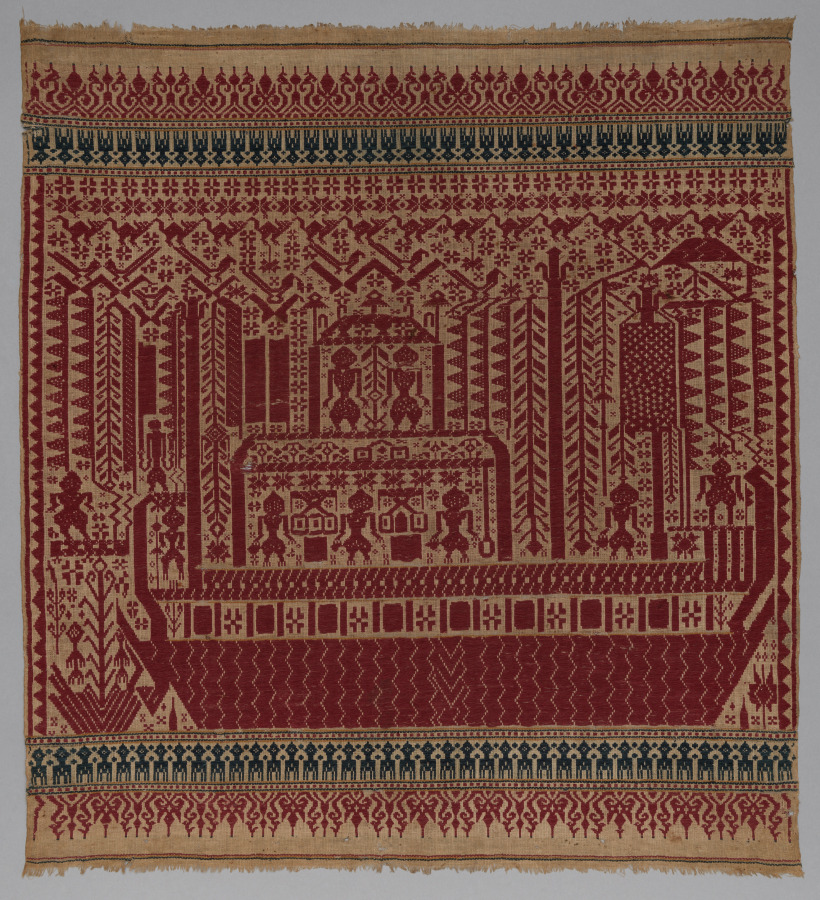
Tampan Pasisir (Ship Cloth) (1800s) is in the Cleveland Museum of Art collection.
The work and its context
The museum's open-access catalogue describes the work:
For several hundred years, until early in the present century, textiles of this type played an essential, symbolic role in virtually every southern Sumatran ritual. Since there is no written mythological literature in Indonesia, the exact meaning of the "tampan pasisir" (as this ritual cloth is called) remains unknown. Nevertheless, this fine weaving must be a kind of narrative. Ships, of course, were essential to the life of these island people, and using one as an image for safe passage from one of life's stages to another seems plausible. This rare piece--few textiles of its age and condition from the tropical climes of Indonesia survive--was a most welcome gift to The Cleveland Museum of Art from the Textile Arts Club in honor of its 50th anniversary.
Object facts
- Title: Tampan Pasisir (Ship Cloth)
- Date: 1800s
- Culture: Indonesia, Sumatra, Lampung, 19th century
- Type: Textile
- Technique: tabby weave with supplementary weft; cotton
- Dimensions: Overall: 72.4 x 66.7 cm (28 1/2 x 26 1/4 in.)
- Collection: Textiles
- Department: Textiles
- Accession number: 1984.50
Collection credit
Gift of The Textile Arts Club
Further reading listed by the museum
- Wardwell, Anne E. Material Matters: Fifty Years of Gifts from the Textile Arts Club, 1934-1984 : [Exhibition] 21 November-30 December 1984, the Cleveland Museum of Art. Cleveland: The Museum, 1984.
View the collection record
See the museum's photographs and full catalogue entry. Catalogue text is reproduced from the Cleveland Museum of Art's open-access data, with HTML formatting removed. This object and its supplied image are designated CC0.
Sources
More in Lifestyle
Keep reading