Tankard (1665): Art, History and Details
Tankard at the Cleveland Museum of Art: 1665, silver gilt. Explore the work's context, creator attribution and collection history.
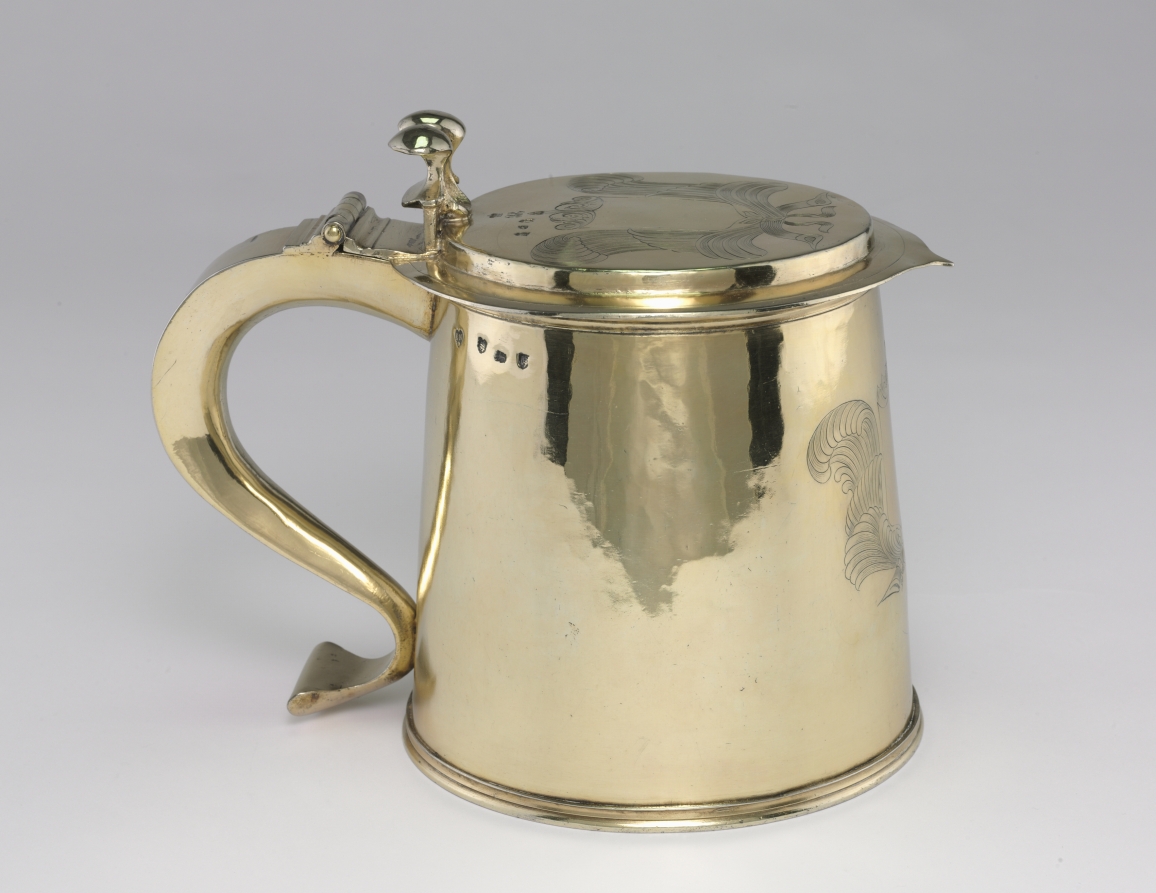
Tankard (1665) is in the Cleveland Museum of Art collection.
The work and its context
The museum's open-access catalogue describes the work:
Silver fulfilled a prominent role in projecting wealth, status, power, and ritual in British life during the 1600s and 1700s. Elaborate forms such as two-handled cups, trophies, trays, and centerpieces not only represented wealth in their sheer silver weight but also provided royal and aristocratic owners a surface for displaying engraved coats of arms, projecting identity and social status. Less wealthy individuals made do with more functional items such as this tankard. The empty cartouches on the drinking vessel suggest that it was produced without a specific patron in mind and that a coat of arms was intended to be added at a later time.
Object facts
- Title: Tankard
- Date: 1665
- Culture: England, London
- Type: Silver
- Technique: silver gilt
- Dimensions: Diameter: 20.7 x 14.3 cm (8 1/8 x 5 5/8 in.)
- Collection: Decorative Arts
- Department: Decorative Art and Design
- Accession number: 1936.352
A detail from the museum
Tankards, with their characteristic hinged covers, scroll handles, and lobed thumbpieces, were used to drink beer or ale.
Collection credit
Gift of Grace Studebaker Fish in memory of her father, John Mohler Studebaker
Further reading listed by the museum
- Foote, Helen. "An English Tankard." The Bulletin of the Cleveland Museum of Art 25, no. 4 (April 1938): 67
View the collection record
See the museum's photographs and full catalogue entry. Catalogue text is reproduced from the Cleveland Museum of Art's open-access data, with HTML formatting removed. This object and its supplied image are designated CC0.
Sources
More in Lifestyle
Keep reading