Tasciovanus Stater: Wreath (obverse); Horse and Armed Rider (reverse) (c. 20 BCE–10 CE): Art, History and Details
Tasciovanus Stater: Wreath (obverse); Horse and Armed Rider (reverse) at the Cleveland Museum of Art: c. 20 BCE–10 CE, gold. Explore the work's context, creator attribution and collection history.
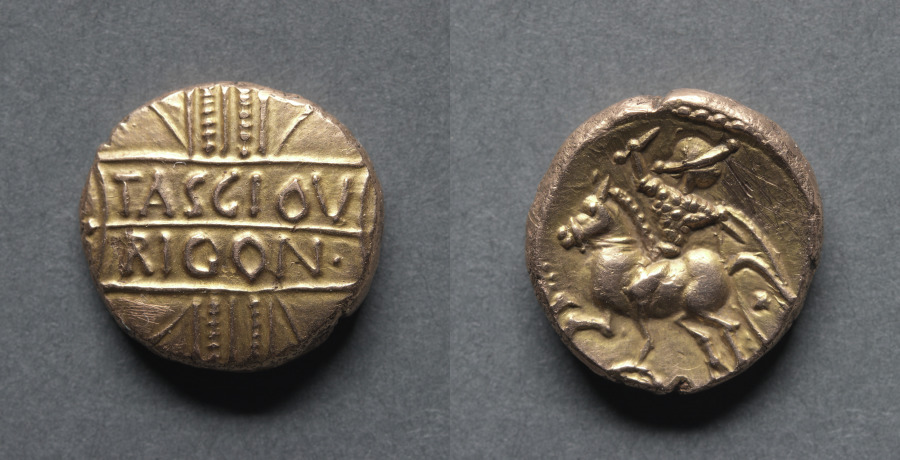
Tasciovanus Stater: Wreath (obverse); Horse and Armed Rider (reverse) (c. 20 BCE–10 CE) is in the Cleveland Museum of Art collection.
The work and its context
The museum's open-access catalogue describes the work:
The clarity of the obverse legend sets this piece beyond all doubt. The meaning of RICON, which on some other specimens occurs as RICONI or RIGON, is uncertain. Some authorities believe it to be the Celtic form of REX or king. A high quality or workmanship, the horse has a clear, three-dimensional appearance. The warrior's cuirass is a point of interest as it may show mail being used. The warrior's shield is on his outstretched left arm, trailing behind the horse as the rider turns in his saddle, probably encouraging his army.
Object facts
- Title: Tasciovanus Stater: Wreath (obverse); Horse and Armed Rider (reverse)
- Date: c. 20 BCE–10 CE
- Culture: England, Catuvellauni
- Type: Coins
- Technique: gold
- Dimensions: Diameter: 1.7 cm (11/16 in.)
- Collection: MED - Numismatics
- Department: Medieval Art
- Accession number: 1969.151
A detail from the museum
The name Tasciovanos is only known through coin and appears to have become king of the Catuvellauni around 20 BC.
Collection credit
The Norweb Collection
Further reading listed by the museum
- Cleveland Museum of Art, and Emery May Norweb. English Gold Coins, Ancient to Modern Times, On Loan to the Cleveland Museum of Art from the Norweb Collection. 1968.
- Emery May Norweb Collection (Cleveland, Ohio), Emery May Norweb, C. E. Blunt, F. Elmore Jones, and R. P. Mack. Collection of Ancient British, Romano-British and English Coins. London: Spink, 1971.
View the collection record
See the museum's photographs and full catalogue entry. Catalogue text is reproduced from the Cleveland Museum of Art's open-access data, with HTML formatting removed. This object and its supplied image are designated CC0.
Sources
More in Lifestyle
Keep reading