Tea Bowl (c. 1600): Art, History and Details
Tea Bowl at the Cleveland Museum of Art: c. 1600, Glazed stoneware (Karatsu ware). Explore the work's context, creator attribution and collection history.
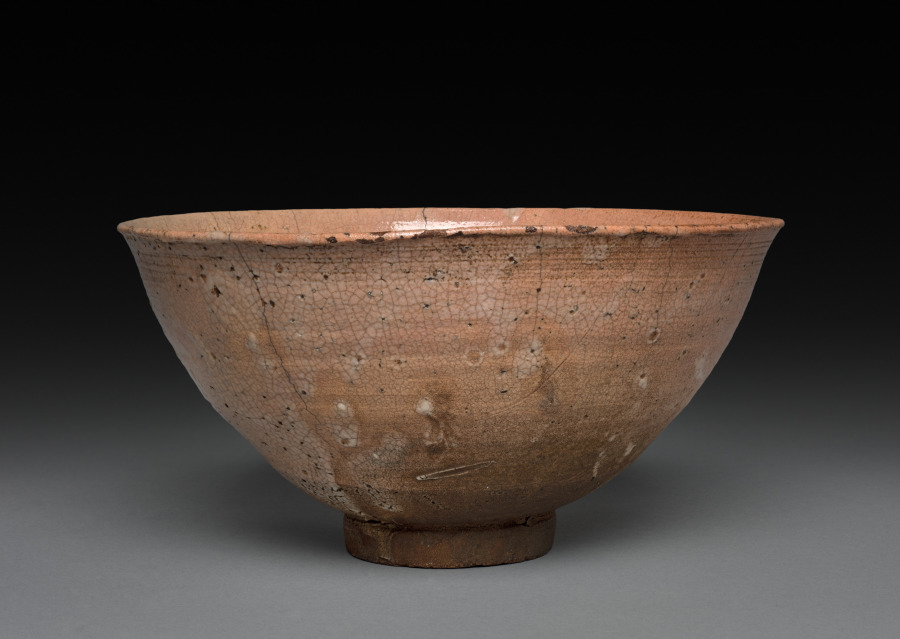
Tea Bowl (c. 1600) is in the Cleveland Museum of Art collection.
The work and its context
The museum's open-access catalogue describes the work:
Wide-mouthed bowls were used for consuming whipped tea such as that imbibed during the tea ceremony. Karatsu ware like this was among the most prized of such tea bowls. The port city of Karatsu in Saga prefecture in Kyushu was known for its kilns that produced high-fired, Korean-style glazed pottery. The Japanese ruler Toyotomi Hideyoshi invaded Korea in 1592 and 1597, returning with families of Korean potters as spoils of war. This region was one of the sites where these potters were resettled.
Object facts
- Title: Tea Bowl
- Date: c. 1600
- Culture: Japan, Momoyama period (1573–1615)
- Type: Ceramic
- Technique: Glazed stoneware (Karatsu ware)
- Dimensions: Diameter: 18.4 cm (7 1/4 in.); Overall: 9.5 cm (3 3/4 in.)
- Collection: Japanese Art
- Department: Japanese Art
- Accession number: 1983.158
Collection credit
Gift of Iwao and Takako Setsu in honor of Dr. and Mrs. Sherman E. Lee
Further reading listed by the museum
- Turner, Evan H. “Year in Review for 1983.” The Bulletin of the Cleveland Museum of Art 71, no. 2 (February 1984): 38–79.
- Cleveland Museum of Art. The CMA Companion: A Guide to the Cleveland Museum of Art. Cleveland: Cleveland Museum of Art, 2014.
View the collection record
See the museum's photographs and full catalogue entry. Catalogue text is reproduced from the Cleveland Museum of Art's open-access data, with HTML formatting removed. This object and its supplied image are designated CC0.
Sources
More in Lifestyle
Keep reading