Tea Caddy with Stamped Floral Decoration (1600s): Art, History and Details
Tea Caddy with Stamped Floral Decoration at the Cleveland Museum of Art: 1600s, glazed stoneware with stamped and incised inlaid white slip decoration. Explore the work's context, creator attribution and collection history.
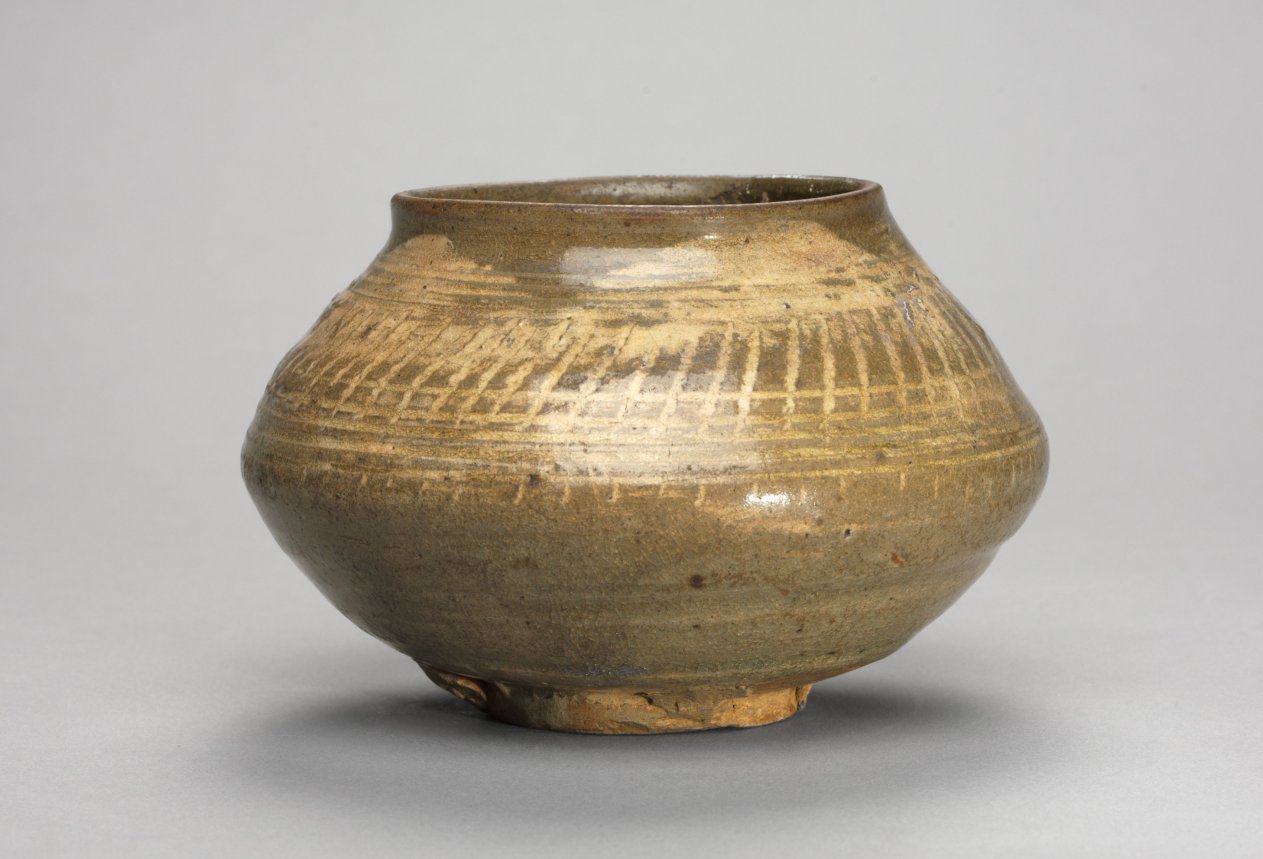
Tea Caddy with Stamped Floral Decoration (1600s) is in the Cleveland Museum of Art collection.
The work and its context
The museum's open-access catalogue describes the work:
This small jar may have been used as a container for powdered tea among Japanese tea drinkers. Possibly produced in one of the kilns established by the trading office (Waegwan) in Busan, southern Gyeongsang province, this type of tea ware may have sold to Japanese tea bowl collectors. According to a historical record dated to 1641, a trading boat shipped more than 14,000 tea bowls to Japan.
Object facts
- Title: Tea Caddy with Stamped Floral Decoration
- Date: 1600s
- Culture: Korea, Joseon dynasty (1392–1910)
- Type: Ceramic
- Technique: glazed stoneware with stamped and incised inlaid white slip decoration
- Dimensions: Overall: 8 cm (3 1/8 in.)
- Collection: Korean Art
- Department: Korean Art
- Accession number: 1962.498
A detail from the museum
This tea caddy may have been produced in one of the kilns established and operated by the trading office (Waegwan) in Buan, southern Gyeongsang province, as an export item for Japanese tea ware collectors.
Collection credit
Gift of the John Huntington Art and Polytechnic Trust by exchange
Further reading listed by the museum
- Yi, Jong-bong. “The Production of Ceramics in Gijang and Its Significance in the Joseon Dynasty [조선시대 기장지역의 도자기 생산과 의미].” Hanguk minjok munhwa (2009): 3–38.
- Hur, Nam-lin. “Korean Tea Bowls (Kōrai Chawan) and Japanese Wabicha: A Story of Acculturation in Premodern Northeast Asia.” Korean Studies 39 (2015): 1–22.
- Buncheong Ware [분청사기]. Seoul: Ehwa Woman’s Universtiry Museum, 2019.
View the collection record
See the museum's photographs and full catalogue entry. Catalogue text is reproduced from the Cleveland Museum of Art's open-access data, with HTML formatting removed. This object and its supplied image are designated CC0.
Sources
More in Lifestyle
Keep reading