Teapot with Pines (1893–1914): Art, History and Details
Teapot with Pines at the Cleveland Museum of Art: 1893–1914, Porcelain with underglaze blue. Explore the work's context, creator attribution and collection history.
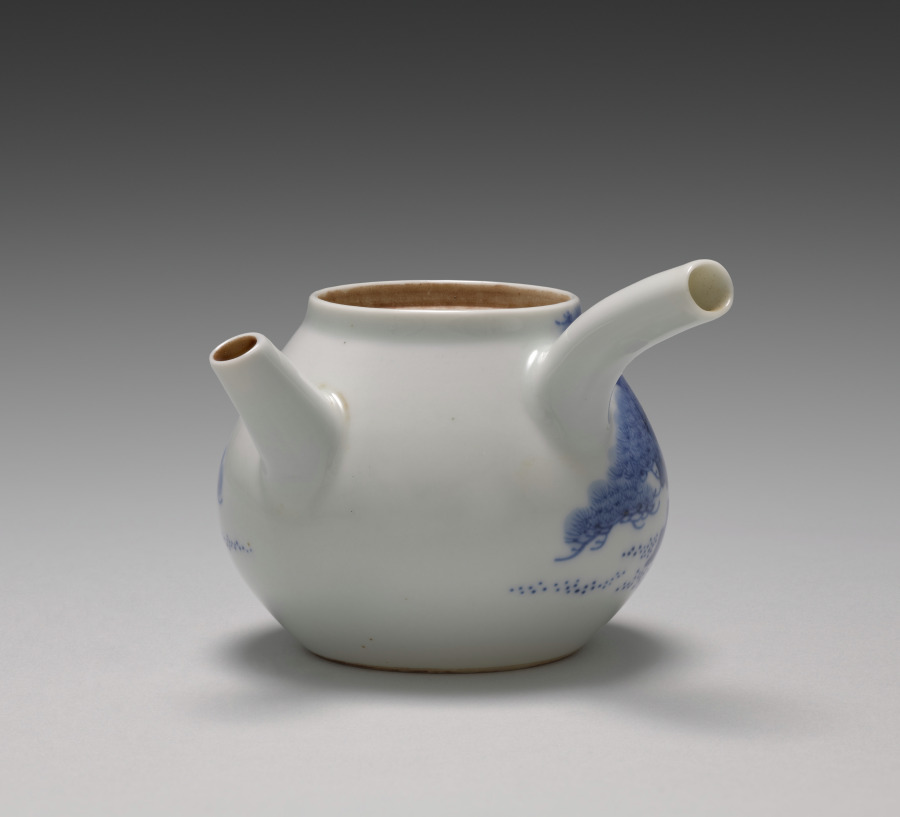
Teapot with Pines (1893–1914) is in the Cleveland Museum of Art collection. The museum's creator attribution is Seifū Yohei III (Japanese, 1851–1914).
The work and its context
The museum's open-access catalogue describes the work:
Side-handled teapots known as kyūsu and hot water coolers, or yuzamashi, are essential components of sencha tea sets. The teapot is, of course, meant for steeping and serving the tea. Yuzamashi are used to cool boiled water to the ideal temperature for the type of tea to be brewed. This teapot has a pine in underglaze blue on each side. The tip of one of these pines reaches onto the tiny lid, and as with the trees on the Water Cooler with Pines, CMA 2022.163, the trunks are curvy ribbons with little definition. Considering the execution of their designs, one might imagine the pot and cooler to have been part of the same set.
Object facts
- Title: Teapot with Pines
- Date: 1893–1914
- Creator attribution: Seifū Yohei III (Japanese, 1851–1914)
- Culture: Japan
- Type: Ceramic
- Technique: Porcelain with underglaze blue
- Dimensions: Diameter: 8 cm (3 1/8 in.); width with handle: 10.5 cm (4 1/8 in.)
- Collection: Japanese Art
- Department: Japanese Art
- Accession number: 2022.162.a
A detail from the museum
The teapot's box has a seal of Yamamoto Shōseidō, a shop in Osaka that sold fine ceramics.
Collection credit
Gift of James and Christine Heusinger
Further reading listed by the museum
- Maezaki, Shinya and Sinéad Vilbar. Colors of Kyoto: The Seifū Yohei Ceramic Studio. Cleveland, OH: The Cleveland Museum of Art, 2023.
View the collection record
See the museum's photographs and full catalogue entry. Catalogue text is reproduced from the Cleveland Museum of Art's open-access data, with HTML formatting removed. This object and its supplied image are designated CC0.
Sources
More in Lifestyle
Keep reading