Tetradrachm: Owl, standing, r., crescent moon and olive branch above (reverse) (449–440 BCE): Art, History and Details
Tetradrachm: Owl, standing, r., crescent moon and olive branch above (reverse) at the Cleveland Museum of Art: 449–440 BCE, silver. Explore the work's context, creator attribution and collection history.
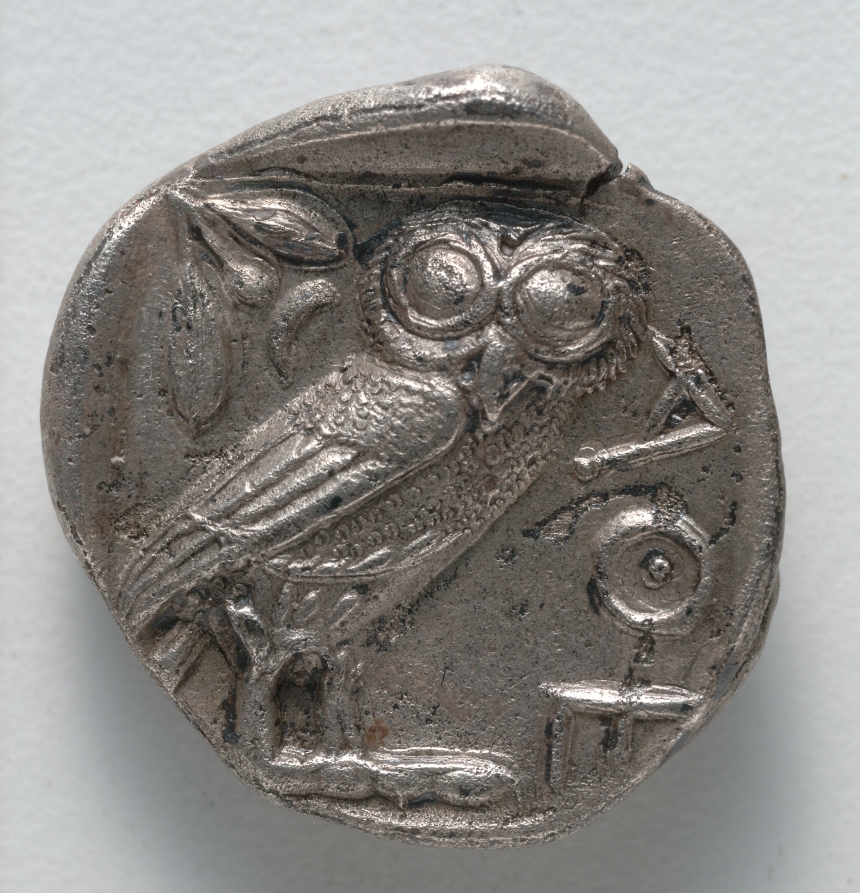
Tetradrachm: Owl, standing, r., crescent moon and olive branch above (reverse) (449–440 BCE) is in the Cleveland Museum of Art collection.
The work and its context
The museum's open-access catalogue describes the work:
Incorporating the first three letters of the city name—ΑΘΕ—with then-iconic images of the patron goddess Athena and her owl, the Athenian tetradrachm was among the most widely traded and most recognizable coins of the ancient world. The olive leaves on Athena’s helmet and the small crescent moon behind the owl date three of these coins after the Persian Wars.
Object facts
- Title: Tetradrachm: Owl, standing, r., crescent moon and olive branch above (reverse)
- Date: 449–440 BCE
- Culture: Greek, minted at Athens (Attica)
- Type: Coins
- Technique: silver
- Dimensions: Diameter: 2.3 cm (7/8 in.)
- Collection: GR - Greek
- Department: Greek and Roman Art
- Accession number: 1941.296.b
A detail from the museum
The images of Athena on the obverse and her owl here unmistakably identify this coin as Athenian.
Collection credit
Gift of Dr. Jacob Hirsch
View the collection record
See the museum's photographs and full catalogue entry. Catalogue text is reproduced from the Cleveland Museum of Art's open-access data, with HTML formatting removed. This object and its supplied image are designated CC0.
Sources
More in Lifestyle
Keep reading