The Cave Door of Spring (1825): Art, History and Details
The Cave Door of Spring at the Cleveland Museum of Art: 1825, pentaptych of woodblock prints; ink and color on paper. Explore the work's context, creator attribution and collection history.
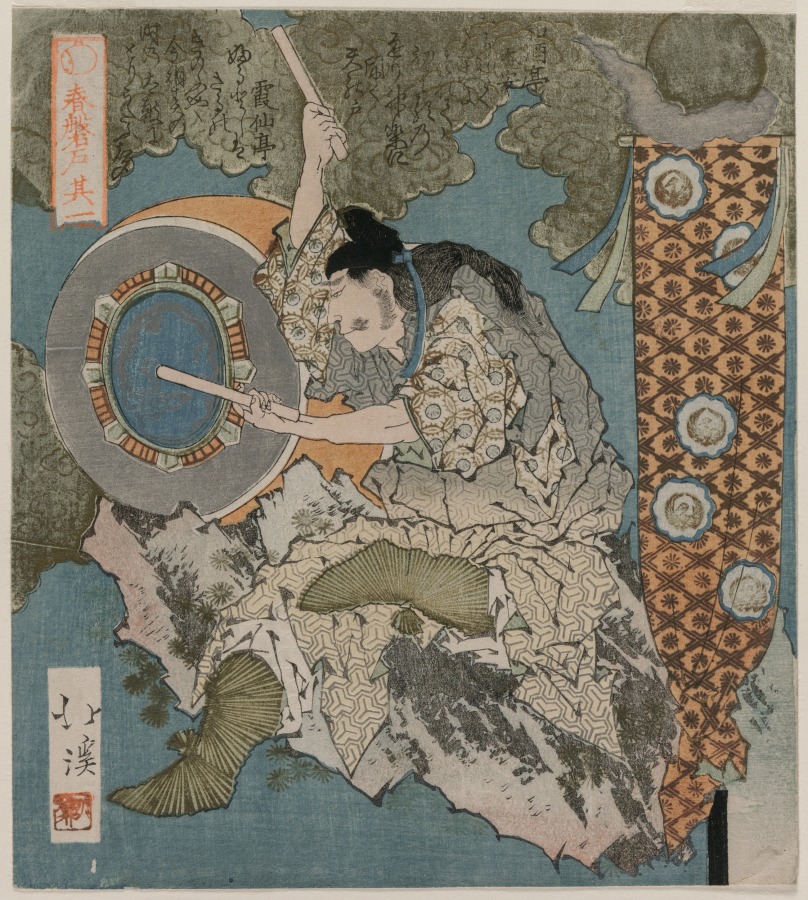
The Cave Door of Spring (1825) is in the Cleveland Museum of Art collection. The museum's creator attribution is Totoya Hokkei (Japanese, 1780–1850).
The work and its context
The museum's open-access catalogue describes the work:
These prints form a composition inspired by a story about the deity Amaterasu. She was once so offended by her brother that she retreated into a cave, leaving the earth in darkness. Several attempts to lure her out with cocks crowing, music-making, and a goddess dancing failed, but a mirror hung from a nearby tree made Amaterasu curious, bringing her to the entrance of the cave. A stone was quickly placed at the entrance to block her way back into the cave, and light was restored to the world. The scene across the prints is unified by embossed clouds enriched with gold, silver, and copper.
Object facts
- Title: The Cave Door of Spring
- Date: 1825
- Creator attribution: Totoya Hokkei (Japanese, 1780–1850)
- Culture: Japan, Edo period (1615–1868)
- Type: Print
- Technique: pentaptych of woodblock prints; ink and color on paper
- Dimensions: Each: 18.8 x 21.4 cm (7 3/8 x 8 7/16 in.)
- Collection: Japanese Art
- Department: Japanese Art
- Accession number: 1940.990
Collection credit
Bequest of James Parmelee
Further reading listed by the museum
- Liebert, Emily. “Julie Mehretu: Portals.” Cleveland Art: Cleveland Museum of Art Members Magazine 62, no. 2 (2022): 12.
View the collection record
See the museum's photographs and full catalogue entry. Catalogue text is reproduced from the Cleveland Museum of Art's open-access data, with HTML formatting removed. This object and its supplied image are designated CC0.
Sources
More in Lifestyle
Keep reading