The Little Fortune (c. 1497): Art, History and Details
The Little Fortune at the Cleveland Museum of Art: c. 1497, engraving. Explore the work's context, creator attribution and collection history.
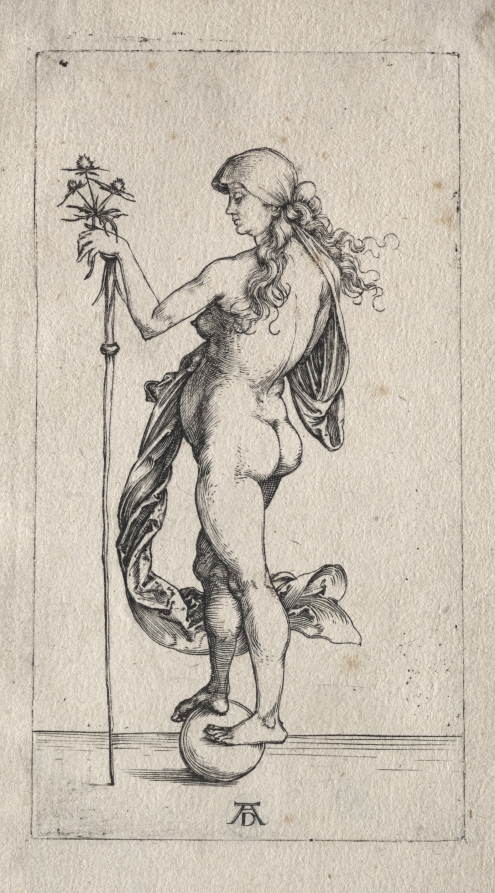
The Little Fortune (c. 1497) is in the Cleveland Museum of Art collection. The museum's creator attribution is Albrecht Dürer (German, 1471–1528).
The work and its context
The museum's open-access catalogue describes the work:
With the help of a staff, Fortuna, the goddess of fortune or chance, balances on a sphere and holds a sprig of flowers in her left hand. In addition to representing her instability, the sphere suggests the worldly domain over which she influences at random. The flowers, traditionally identified as Eryngium, held aphrodisiac powers, suggesting the fickle nature of love. A more recent interpretation identifies them as Sternkraut, a plant that symbolized the idea that one’s fate has already been written. Both readings of the engraving, whether it regards love or life, inform the viewer that destiny is not of one’s own choosing.
Object facts
- Title: The Little Fortune
- Date: c. 1497
- Creator attribution: Albrecht Dürer (German, 1471–1528)
- Culture: Germany, late 15th-early 16th Century
- Type: Print
- Technique: engraving
- Collection: PR - Engraving
- Department: Prints
- Accession number: 1958.106
Collection credit
Bequest of Leonard C. Hanna Jr.
View the collection record
See the museum's photographs and full catalogue entry. Catalogue text is reproduced from the Cleveland Museum of Art's open-access data, with HTML formatting removed. This object and its supplied image are designated CC0.
Sources
More in Lifestyle
Keep reading