The Pietà (c. 1515–17): Art, History and Details
The Pietà at the Cleveland Museum of Art: c. 1515–17, engraving. Explore the work's context, creator attribution and collection history.
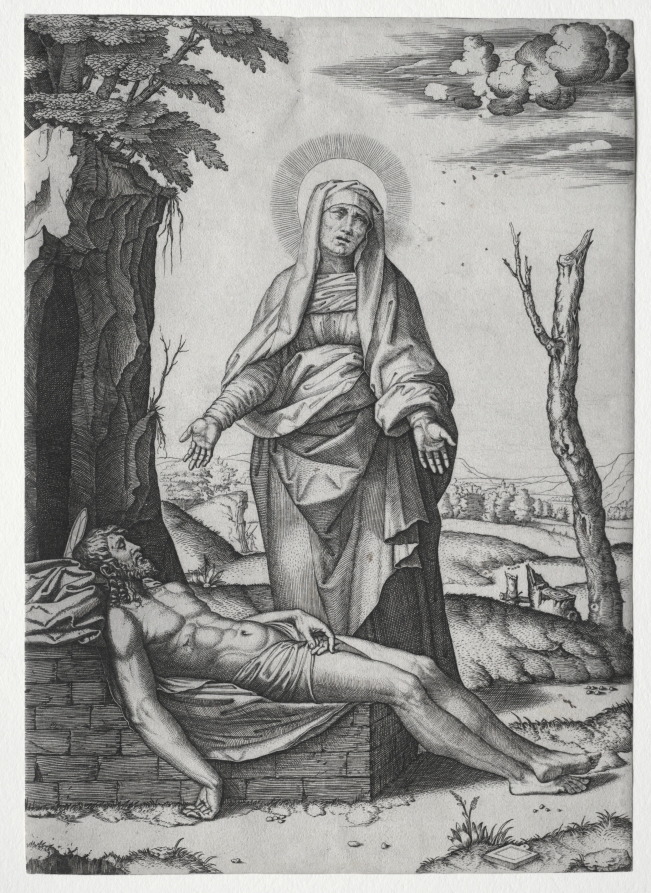
The Pietà (c. 1515–17) is in the Cleveland Museum of Art collection. The museum's creator attribution is Marcantonio Raimondi (Italian, 1470/82–1527/34); Raphael (Italian, 1483–1520).
The work and its context
The museum's open-access catalogue describes the work:
The pietà—a scene of the Virgin Mary holding the dead body of Christ—was a traditional subject for sculpture in Northern Europe. Michelangelo’s sculpted Pietà of 1498 brought the composition to Italy and infused it with the idealism of classical sculpture. His contemporary, Raphael, designed this version of the scene two decades later, which was then engraved by Marcantonio Raimondi. It builds upon Michelangelo’s sculpted version but focuses on Mary’s statuesque pose and her intense expression of grief. The dead Christ—still idealized and classical in form—is laid before her rather than held in her lap.
Object facts
- Title: The Pietà
- Date: c. 1515–17
- Creator attribution: Marcantonio Raimondi (Italian, 1470/82–1527/34); Raphael (Italian, 1483–1520)
- Culture: Italy
- Type: Print
- Technique: engraving
- Collection: PR - Engraving
- Department: Prints
- Accession number: 1944.22
Collection credit
Gift of The Print Club of Cleveland
Further reading listed by the museum
- “Gifts of the Print Club of Cleveland.” The Bulletin of the Cleveland Museum of Art 47, no. 2 (February 1960): 28–35.
- Amodei, Tito. La Passione di Gesù nell'arte Italiana. Teramo: Palumbi, 2017.
View the collection record
See the museum's photographs and full catalogue entry. Catalogue text is reproduced from the Cleveland Museum of Art's open-access data, with HTML formatting removed. This object and its supplied image are designated CC0.
Sources
More in Lifestyle
Keep reading