The Pyramids of Saqqara, from the Northeast (1858): Art, History and Details
The Pyramids of Saqqara, from the Northeast at the Cleveland Museum of Art: 1858, albumen print from wet collodion negative. Explore the work's context, creator attribution and collection history.
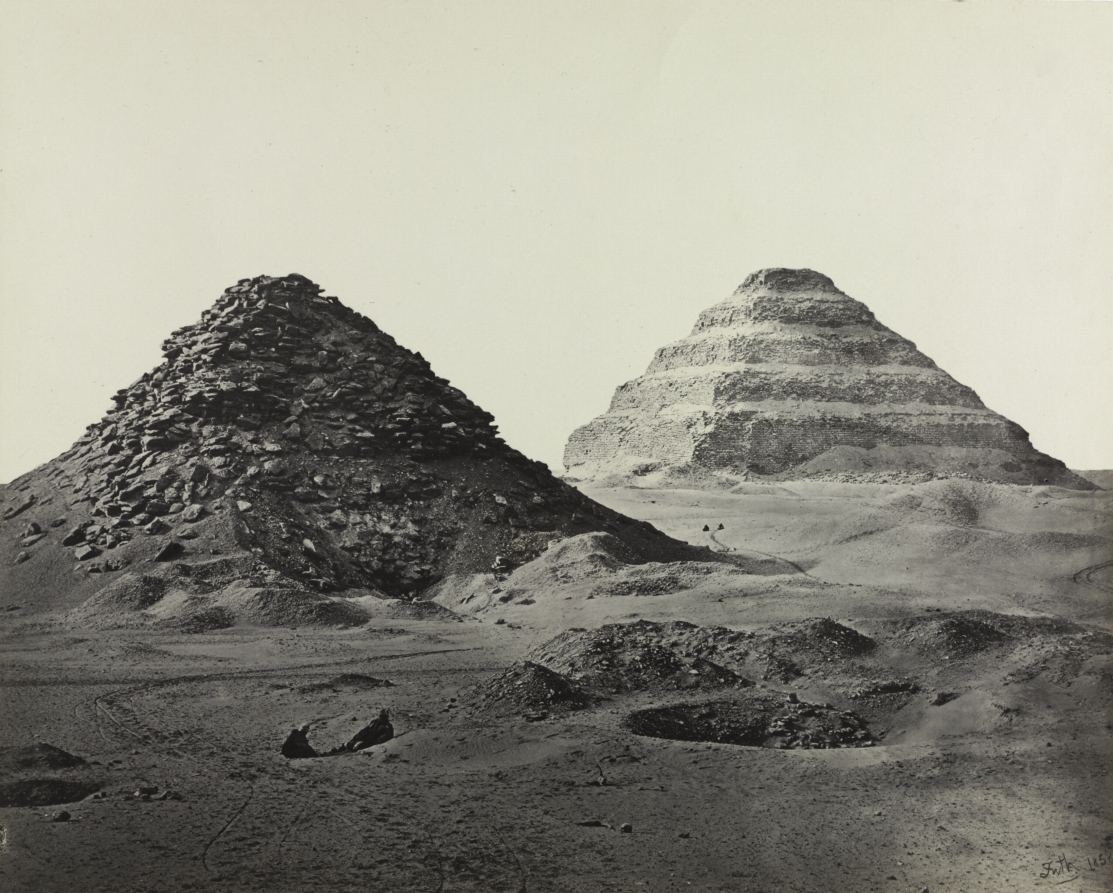
The Pyramids of Saqqara, from the Northeast (1858) is in the Cleveland Museum of Art collection. The museum's creator attribution is Francis Frith (British, 1822–1898).
The work and its context
The museum's open-access catalogue describes the work:
Frith was the first photographer in Egypt to successfully use the wet collodion process, introduced in 1851. Its glass plate negatives yielded sharper, more detailed images than paper ones. He even created mammoth plate prints, as this size is called, which required equally large glass plate negatives. Pursuing the process’s exacting chemistry in Egypt’s scorching sunlight was trying. Frith sometimes sought refuge in tombs for the cool air and darkness to process his plates. “Pushing myself backwards upon my hands and knees, into a damp slimy rock-tomb . . . I prepared my pictures by candlelight in one of the interior chambers. . . . The floor was covered . . . with an impalpable ill flavored dust, which rose in clouds as we moved; from the roof were suspended groups of fetid bats.”
Object facts
- Title: The Pyramids of Saqqara, from the Northeast
- Date: 1858
- Creator attribution: Francis Frith (British, 1822–1898)
- Culture: England, 19th century
- Type: Photograph
- Technique: albumen print from wet collodion negative
- Dimensions: Image: 38.2 x 47.7 cm (15 1/16 x 18 3/4 in.); Matted: 61 x 76.2 cm (24 x 30 in.)
- Collection: PH - British 19th Century
- Department: Photography
- Accession number: 1996.19
Collection credit
Gift of Charles Isaacs in honor of Louis and Martha Isaacs
Further reading listed by the museum
- Cleveland Museum of Art, Tom E Hinson. Catalogue of Photography. Cleveland, OH: Cleveland Museum of Art, 1996.
View the collection record
See the museum's photographs and full catalogue entry. Catalogue text is reproduced from the Cleveland Museum of Art's open-access data, with HTML formatting removed. This object and its supplied image are designated CC0.
Sources
More in Lifestyle
Keep reading