The Rabbit Hunt (1560): Art, History and Details
The Rabbit Hunt at the Cleveland Museum of Art: 1560, etching. Explore the work's context, creator attribution and collection history.
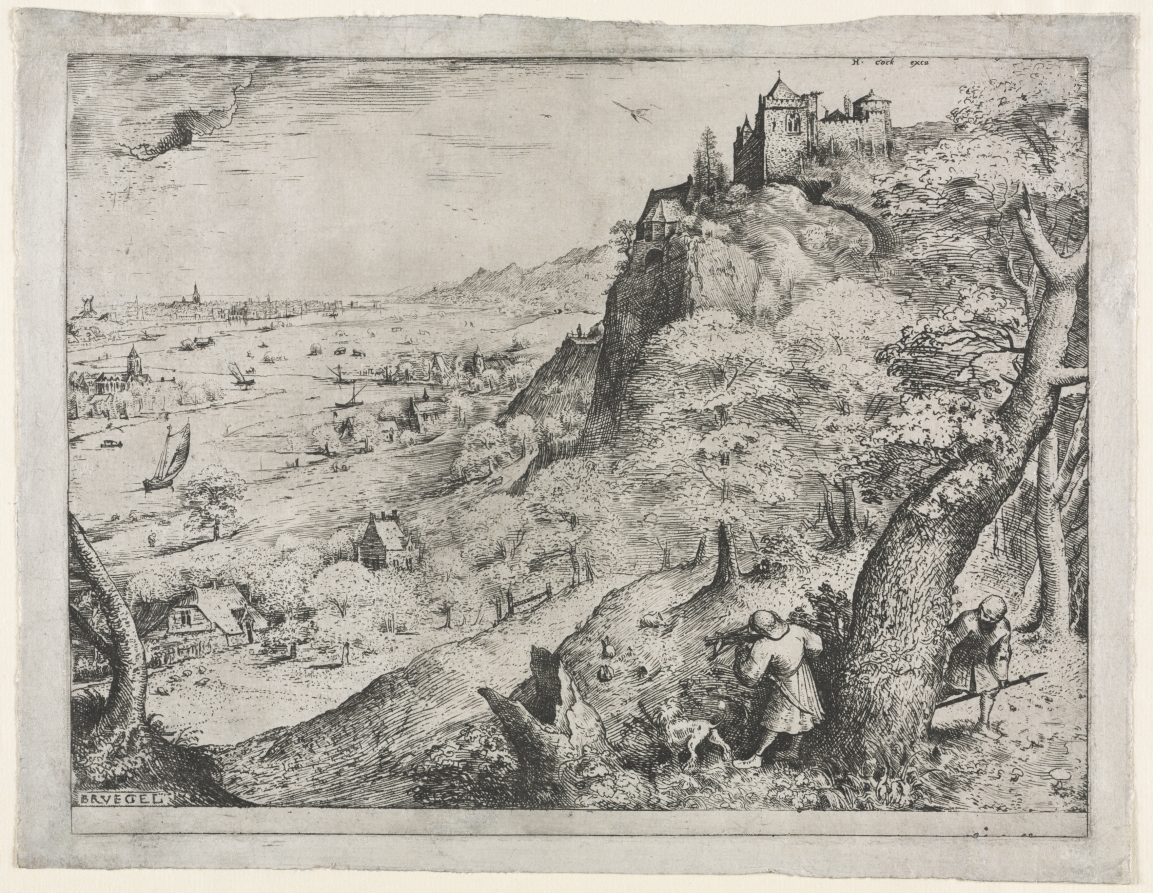
The Rabbit Hunt (1560) is in the Cleveland Museum of Art collection. The museum's creator attribution is Pieter Bruegel (Netherlandish, c. 1525/30–1569).
The work and its context
The museum's open-access catalogue describes the work:
In this etching considered the artist's only autograph print, Pieter Bruegel the Elder replicated the graphic vocabulary of dots and dashes of his pen-and-ink drawings to evoke a vivid sense of atmosphere and light and create a deep recession into space. His representations of nature, including majestic mountains—an unusual and popular subject in the flat Netherlands—exemplify an unprecedented naturalism that the artist helped to usher in. What at first appears to be a pleasant landscape with a hunter aiming his crossbow at some rabbits in the grass becomes more ominous when we notice the spear-bearing soldier stalking not the rabbits, but the hunter. Bruegel often translated popular proverbs into pictorial form: in this case, "A hare yourself, you hunt for prey" is the most apt. In Bruegel's world, reversals such as this suggested that humans, vainly believing they control their fate, are instead subject to powers outside of their control.
Object facts
- Title: The Rabbit Hunt
- Date: 1560
- Creator attribution: Pieter Bruegel (Netherlandish, c. 1525/30–1569)
- Culture: Flanders
- Type: Print
- Technique: etching
- Dimensions: Platemark: 22.1 x 29 cm (8 11/16 x 11 7/16 in.); Sheet: 24.3 x 31.8 cm (9 9/16 x 12 1/2 in.)
- Collection: PR - Etching
- Department: Prints
- Accession number: 2009.80
A detail from the museum
Pieter Bruegel the Elder's paintings, drawings, and prints often drew from popular proverbs, translating them into pictorial form. In the case of this etching, "A hare yourself, you hunt for prey" is perhaps the most apt.
Collection credit
Purchase from the J. H. Wade Fund
View the collection record
See the museum's photographs and full catalogue entry. Catalogue text is reproduced from the Cleveland Museum of Art's open-access data, with HTML formatting removed. This object and its supplied image are designated CC0.
Sources
More in Lifestyle
Keep reading



