The Rauschberg (c. 1800): Art, History and Details
The Rauschberg at the Cleveland Museum of Art: c. 1800, black chalk, graphite, and white gouache. Explore the work's context, creator attribution and collection history.
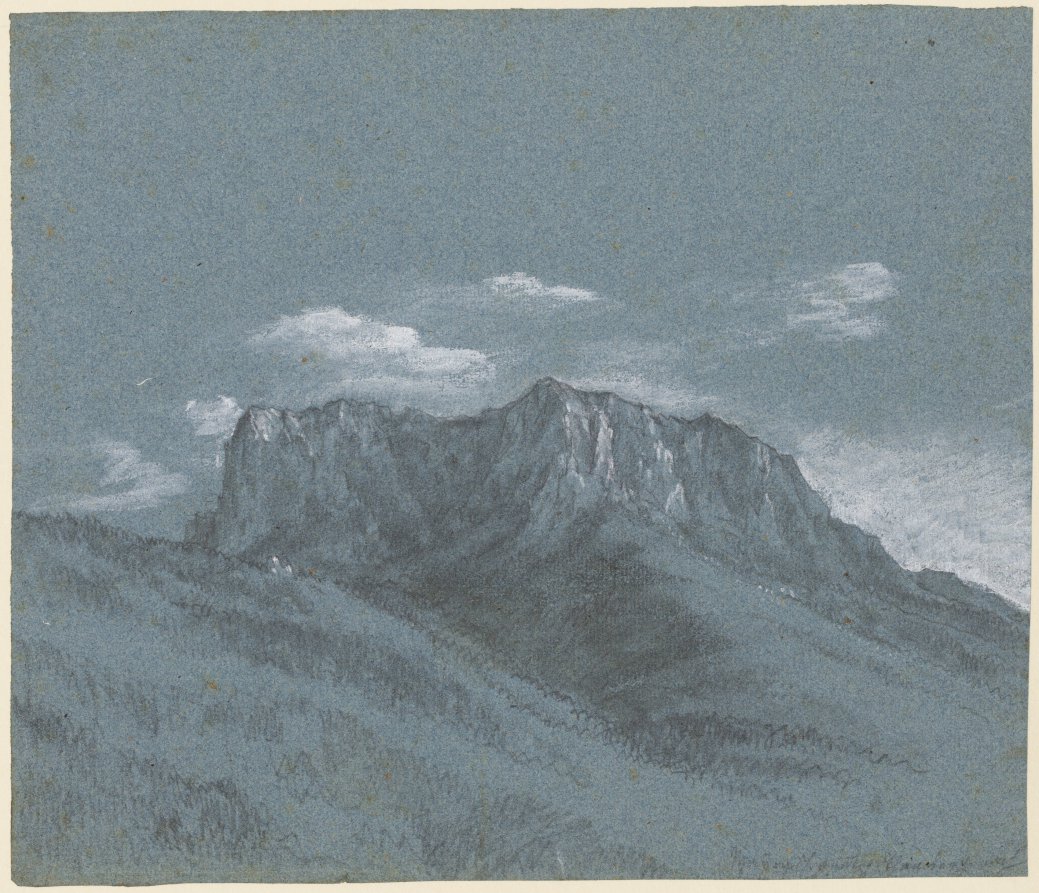
The Rauschberg (c. 1800) is in the Cleveland Museum of Art collection. The museum's creator attribution is Georg von Dillis (German, 1759–1841).
The work and its context
The museum's open-access catalogue describes the work:
Alongside his career as a connoisseur and art historian, Dillis drew and painted enthusiastically. Between 1808 and 1814 he was a professor of landscape painting at the Munich Academy. Most of his work consists of freely painted watercolors and oil sketches executed directly from nature. This atmospheric study of the staggeringly high Rauschberg mountain may have been influenced by English watercolors, with which Dillis was familiar.
Object facts
- Title: The Rauschberg
- Date: c. 1800
- Creator attribution: Georg von Dillis (German, 1759–1841)
- Culture: Germany, 19th century
- Type: Drawing
- Technique: black chalk, graphite, and white gouache
- Dimensions: Sheet: 21.8 x 25.3 cm (8 9/16 x 9 15/16 in.); Secondary Support: 29.9 x 32.6 cm (11 3/4 x 12 13/16 in.)
- Collection: DR - German
- Department: Drawings
- Accession number: 1977.46
Collection credit
Norman O. Stone and Ella A. Stone Memorial Fund
View the collection record
See the museum's photographs and full catalogue entry. Catalogue text is reproduced from the Cleveland Museum of Art's open-access data, with HTML formatting removed. This object and its supplied image are designated CC0.
Sources
More in Lifestyle
Keep reading