The Skeleton of the Buses (c. 1900–10): Art, History and Details
The Skeleton of the Buses at the Cleveland Museum of Art: c. 1900–10, relief etching and letterpress. Explore the work's context, creator attribution and collection history.
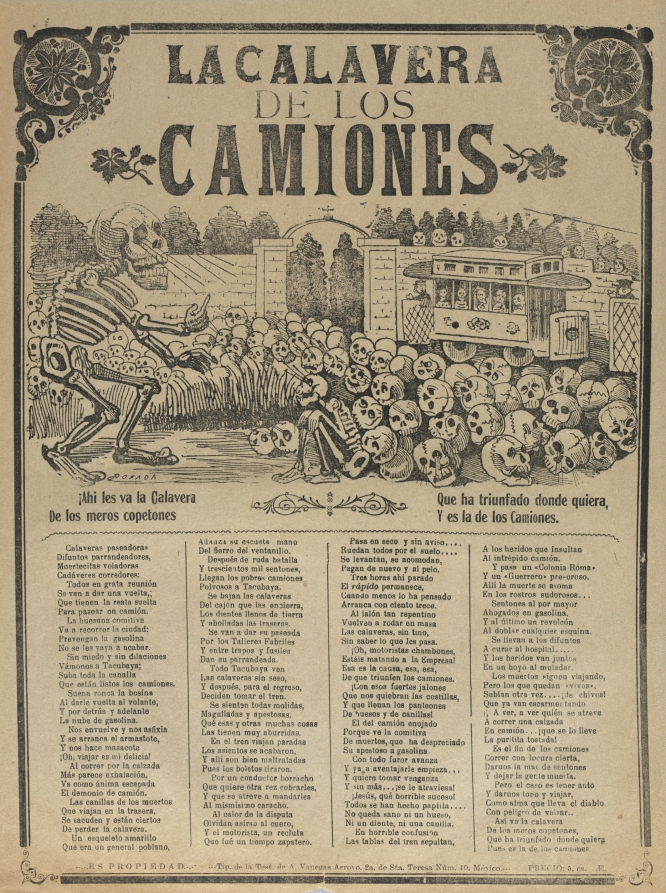
The Skeleton of the Buses (c. 1900–10) is in the Cleveland Museum of Art collection. The museum's creator attribution is José Guadalupe Posada (Mexican, 1852–1913).
The work and its context
The museum's open-access catalogue describes the work:
A number of 20th-century Mexican artists admired José Guadalupe Posada for reaching a broad public through striking imagery and inexpensively printed works. Posada combined image and text in his depictions of social and political issues so that they were accessible to workers, many of whom were illiterate. This print is part of a series in which he used skeletons to humorously comment on current events, such as the danger of electric trams in Mexico City. A streetcar delivers passengers to the figure of Death, who beckons them forward, suggesting that the graveyard where he stands is an inevitable stop on their journey.
Object facts
- Title: The Skeleton of the Buses
- Date: c. 1900–10
- Creator attribution: José Guadalupe Posada (Mexican, 1852–1913)
- Culture: Mexico, 20th century
- Type: Print
- Technique: relief etching and letterpress
- Dimensions: Sheet: 39.4 x 29.3 cm (15 1/2 x 11 9/16 in.)
- Collection: Prints
- Department: Prints
- Accession number: 2000.97
A detail from the museum
José Guadalupe Posada used inexpensive materials and printmaking techniques designed for mass production to make his works accessible to all.
Collection credit
Gift from funds of various donors to the Department of Prints and Drawings
View the collection record
See the museum's photographs and full catalogue entry. Catalogue text is reproduced from the Cleveland Museum of Art's open-access data, with HTML formatting removed. This object and its supplied image are designated CC0.
Sources
More in Lifestyle
Keep reading