The Strolling Musicians (c. 1635): Art, History and Details
The Strolling Musicians at the Cleveland Museum of Art: c. 1635, etching and drypoint. Explore the work's context, creator attribution and collection history.
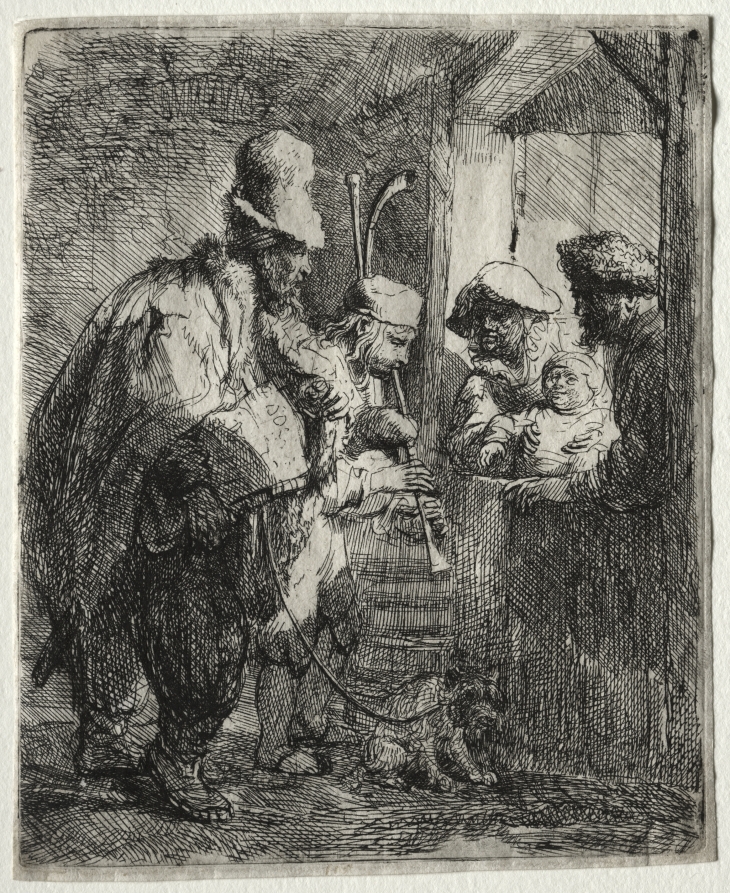
The Strolling Musicians (c. 1635) is in the Cleveland Museum of Art collection. The museum's creator attribution is Rembrandt van Rijn (Dutch, 1606–1669).
The work and its context
The museum's open-access catalogue describes the work:
Although 17th-century Holland produced neither noteworthy composers nor renowned performers, rarely has another culture produced so many visual images of music as the Dutch. In this depiction of a pair of itinerant musicians wearily shuffling from door to door, Rembrandt reveals his compassionate understanding of human frailties. The hurdy-gurdy and bagpipes, as depicted here, were frequently associated with itinerant beggars and blind street singers in paintings and prints of the period.
Object facts
- Title: The Strolling Musicians
- Date: c. 1635
- Creator attribution: Rembrandt van Rijn (Dutch, 1606–1669)
- Culture: Netherlands
- Type: Print
- Technique: etching and drypoint
- Dimensions: Sheet: 14.5 x 11.8 cm (5 11/16 x 4 5/8 in.); Platemark: 14.1 x 11.5 cm (5 9/16 x 4 1/2 in.)
- Collection: PR - Etching
- Department: Prints
- Accession number: 1976.54
Collection credit
Purchase from the J. H. Wade Fund
View the collection record
See the museum's photographs and full catalogue entry. Catalogue text is reproduced from the Cleveland Museum of Art's open-access data, with HTML formatting removed. This object and its supplied image are designated CC0.
Sources
More in Lifestyle
Keep reading