The Triumph of Mordecai (1515): Art, History and Details
The Triumph of Mordecai at the Cleveland Museum of Art: 1515, engraving. Explore the work's context, creator attribution and collection history.
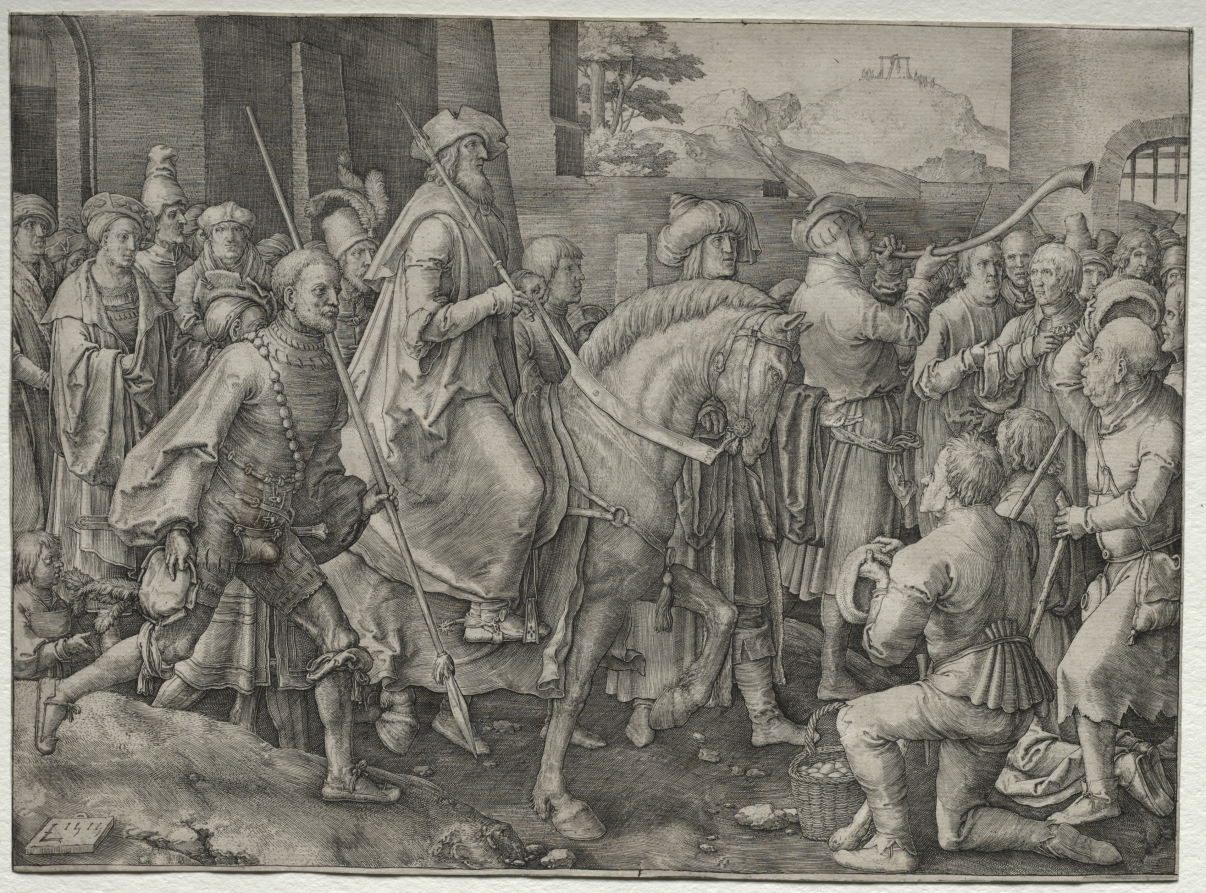
The Triumph of Mordecai (1515) is in the Cleveland Museum of Art collection. The museum's creator attribution is Lucas van Leyden (Netherlandish, 1494–about 1533).
The work and its context
The museum's open-access catalogue describes the work:
Lucas van Leyden’s familiarity with Albrecht Dürer’s Small Horse is evident in this print of the biblical figure Mordecai, who is paraded through the city for his good deeds by his enemy, Haman. By the early 1500s, Dürer’s prints reached the Netherlands, inspiring Lucas to pursue printmaking. Lucas’s influence on engraving would eventually rival that of Dürer’s. His delicate, feathery strokes and gray, silvery ink created atmospheric effects that appear more subtle than Dürer’s boldly graphic compositions. His tonal system includes long, curved lines with occasional notches—visible on the striding figure’s leg—which would be widely copied as a method of shading.
Object facts
- Title: The Triumph of Mordecai
- Date: 1515
- Creator attribution: Lucas van Leyden (Netherlandish, 1494–about 1533)
- Culture: Netherlands, 16th century
- Type: Print
- Technique: engraving
- Collection: PR - Engraving
- Department: Prints
- Accession number: 1929.50
Collection credit
Gift of Mrs. Ralph King
View the collection record
See the museum's photographs and full catalogue entry. Catalogue text is reproduced from the Cleveland Museum of Art's open-access data, with HTML formatting removed. This object and its supplied image are designated CC0.
Sources
More in Lifestyle
Keep reading
Related stories