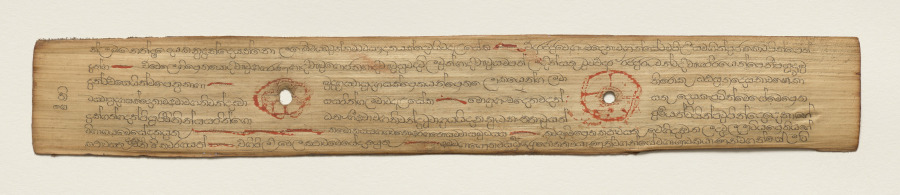
The two erring cooks, dressed as maidservants, fall at the prince’s feet and beg forgiveness, from a Tuti-nama (Tales of the Parrot): Fourth Night (c. 1560): Art, History and Details
The two erring cooks, dressed as maidservants, fall at the prince’s feet and beg forgiveness, from a Tuti-nama (Tales of the Parrot): Fourth Night at the Cleveland Museum of Art: c. 1560, gum tempera, ink, and gold on paper. Explore the wor
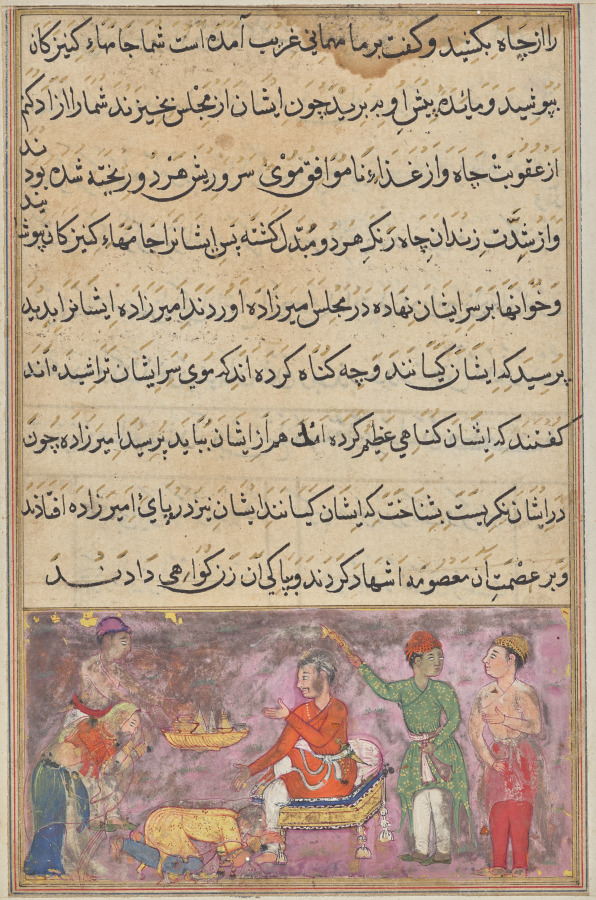
The two erring cooks, dressed as maidservants, fall at the prince’s feet and beg forgiveness, from a Tuti-nama (Tales of the Parrot): Fourth Night (c. 1560) is in the Cleveland Museum of Art collection.
The work and its context
The museum's open-access catalogue describes the work:
Seated on a fine stool in the center, the king is astonished to receive his two handsome cooks, whom he had sent to seduce his soldier’s faithful wife. After she trapped them and kept them prisoner for weeks until the arrival of the king, she shaved their heads and forced them to dress as female servants to shame them for testing her fidelity. Some folios in this manuscript were altered from their original compositions, creating discoloration in many areas. The yellow background was changed to lavender, the legs of the stool were shortened, and the king’s bolster lowered. The manuscript’s patron, the Mughal emperor Akbar, brought artists from many regions of India to work in his court, and some of their compositions and color choices were updated, apparently after they learned of Akbar’s stylistic preferences. This important manuscript, which is almost entirely in the Cleveland Museum of Art’s collection, is critical for understanding the early development of Mughal painting.
Object facts
- Title: The two erring cooks, dressed as maidservants, fall at the prince’s feet and beg forgiveness, from a Tuti-nama (Tales of the Parrot): Fourth Night
- Date: c. 1560
- Culture: Mughal India, court of Akbar (reigned 1556–1605)
- Type: Painting
- Technique: gum tempera, ink, and gold on paper
- Dimensions: Painting only: 5.2 x 10.5 cm (2 1/16 x 4 1/8 in.); Overall: 20 x 14.7 cm (7 7/8 x 5 13/16 in.)
- Collection: Indian Art
- Department: Indian and Southeast Asian Art
- Accession number: 1962.279.30.a
A detail from the museum
Despite their disguises, the prince recognizes the two cooks.
Collection credit
Gift of Mrs. A. Dean Perry
Further reading listed by the museum
- Chandra, Pramod, and Daniel J. Ehnbom. The Cleveland Tuti-Nama Manuscript and the Origins of Mughal Painting. [Cleveland]: Cleveland Museum of Art, 1976.
View the collection record
See the museum's photographs and full catalogue entry. Catalogue text is reproduced from the Cleveland Museum of Art's open-access data, with HTML formatting removed. This object and its supplied image are designated CC0.
Sources
More in Lifestyle
Keep reading