The Wedding of Mopsus and Nisa (The Dirty Bride) (1570): Art, History and Details
The Wedding of Mopsus and Nisa (The Dirty Bride) at the Cleveland Museum of Art: 1570, engraving. Explore the work's context, creator attribution and collection history.
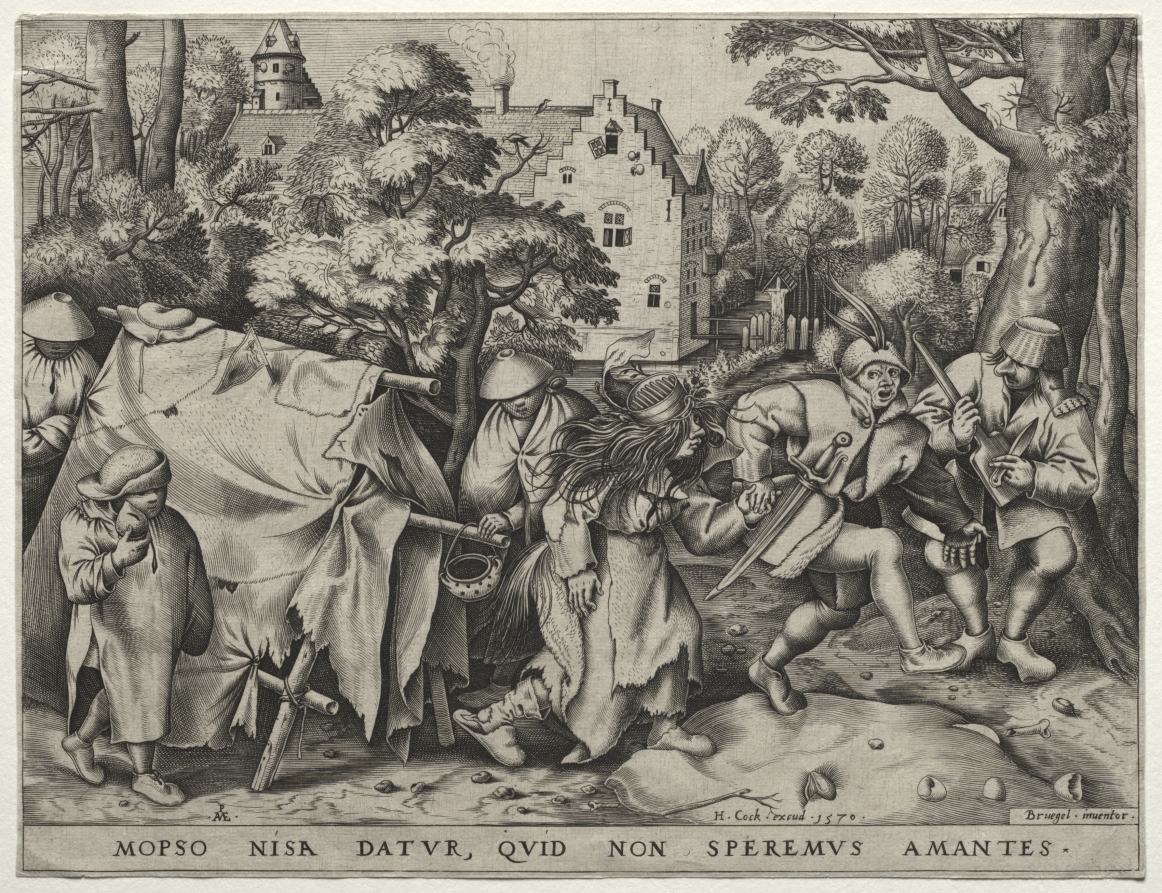
The Wedding of Mopsus and Nisa (The Dirty Bride) (1570) is in the Cleveland Museum of Art collection. The museum's creator attribution is Pieter van der Heyden (Netherlandish, c. 1530–after 1572); Pieter Bruegel (Netherlandish, c. 1525/30–1569).
The work and its context
The museum's open-access catalogue describes the work:
The new engraving publishing industry in Antwerp (in present-day Belgium) paired designers with professional engravers, who could adapt their versatile engraving styles to various subjects. Designed by Pieter Bruegel the Elder, this scene depicts a comic folk play called The Dirty Bride (De Vuile Bruid in Dutch). The play was typically performed during Shrovetide, the carnival season before the Christian observance of Lent. Based on a contemporary proverb, it portrays the bride as messy and disorganized, symbolizing a world “turned upside down.” The verse below translates to “Mopsus marries Nisa, what may not we lovers hope for.”
Object facts
- Title: The Wedding of Mopsus and Nisa (The Dirty Bride)
- Date: 1570
- Creator attribution: Pieter van der Heyden (Netherlandish, c. 1530–after 1572); Pieter Bruegel (Netherlandish, c. 1525/30–1569)
- Culture: Flanders
- Type: Print
- Technique: engraving
- Dimensions: Sheet: 22.4 x 29.2 cm (8 13/16 x 11 1/2 in.)
- Collection: PR - Engraving
- Department: Prints
- Accession number: 1980.103
Collection credit
Mr. and Mrs. Charles G. Prasse Collection
View the collection record
See the museum's photographs and full catalogue entry. Catalogue text is reproduced from the Cleveland Museum of Art's open-access data, with HTML formatting removed. This object and its supplied image are designated CC0.
Sources
More in Lifestyle
Keep reading