Throwing Knife / Prestige Scepter (pingha) (1800–mid-1900s): Art, History and Details
Throwing Knife / Prestige Scepter (pingha) at the Cleveland Museum of Art: 1800–mid-1900s, Iron alloy and plant fiber. Explore the work's context, creator attribution and collection history.
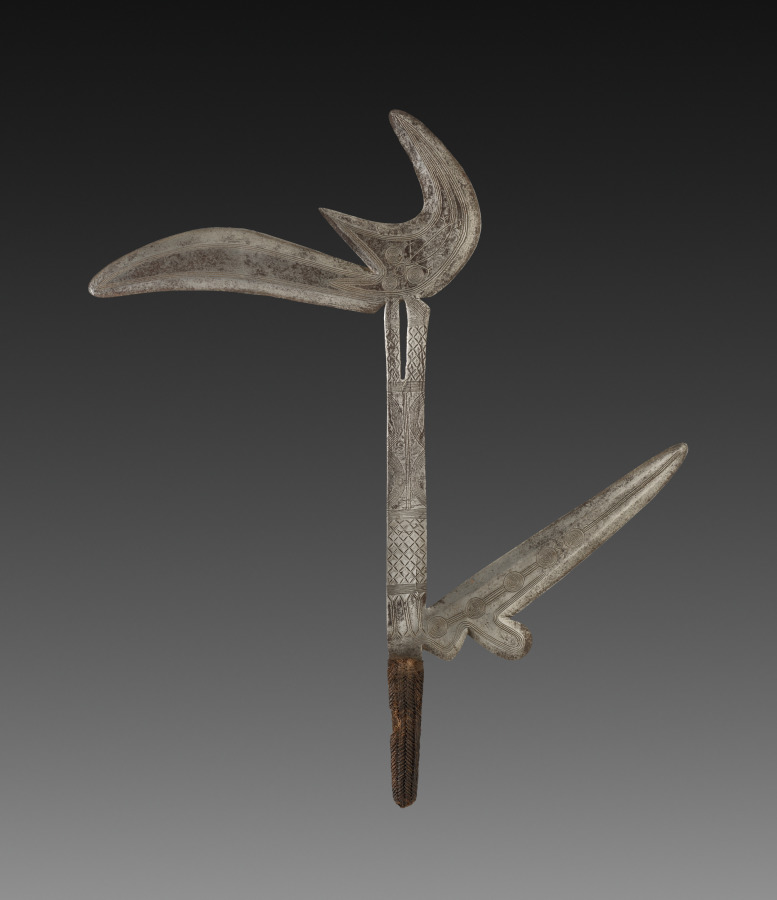
Throwing Knife / Prestige Scepter (pingha) (1800–mid-1900s) is in the Cleveland Museum of Art collection.
The work and its context
The museum's open-access catalogue describes the work:
Throwing knives (pingha, plural kipinga) were historically used by elite Zande men as weapons in the late 1800s and early 1900s. Carefully calibrated, they would spin when thrown or balance on the shoulder when taken into battle. Kipinga were not everyday weapons, but considered property of the king; only those fighting on his behalf like royal bodyguards and court attendants used them. One side of this blade is adorned with complex figural and geometric engravings. No longer used for fighting, kipinga are now a sign of authority and heritage.
Object facts
- Title: Throwing Knife / Prestige Scepter (pingha)
- Date: 1800–mid-1900s
- Culture: Africa, Central or Eastern Africa, Democratic Republic of the Congo, Central African Republic, and Sudan, Zande-style maker
- Type: Arms and Armor
- Technique: Iron alloy and plant fiber
- Dimensions: Overall: 45.5 cm (17 15/16 in.)
- Collection: African Art
- Department: African Art
- Accession number: 2015.156
A detail from the museum
Look closely at the upper blade of this throwing knife to find a representation of a lizard, and at the lower part of the shaft for a crosshatch design resembling lizard skin.
Collection credit
Gift of Donna L. and Robert H. Jackson
View the collection record
See the museum's photographs and full catalogue entry. Catalogue text is reproduced from the Cleveland Museum of Art's open-access data, with HTML formatting removed. This object and its supplied image are designated CC0.
Sources
More in Lifestyle
Keep reading