Tiraz with gold (1094–1101): Art, History and Details
Tiraz with gold at the Cleveland Museum of Art: 1094–1101, plain weave with inwoven tapestry weave: linen, silk, and gold filé. Explore the work's context, creator attribution and collection history.
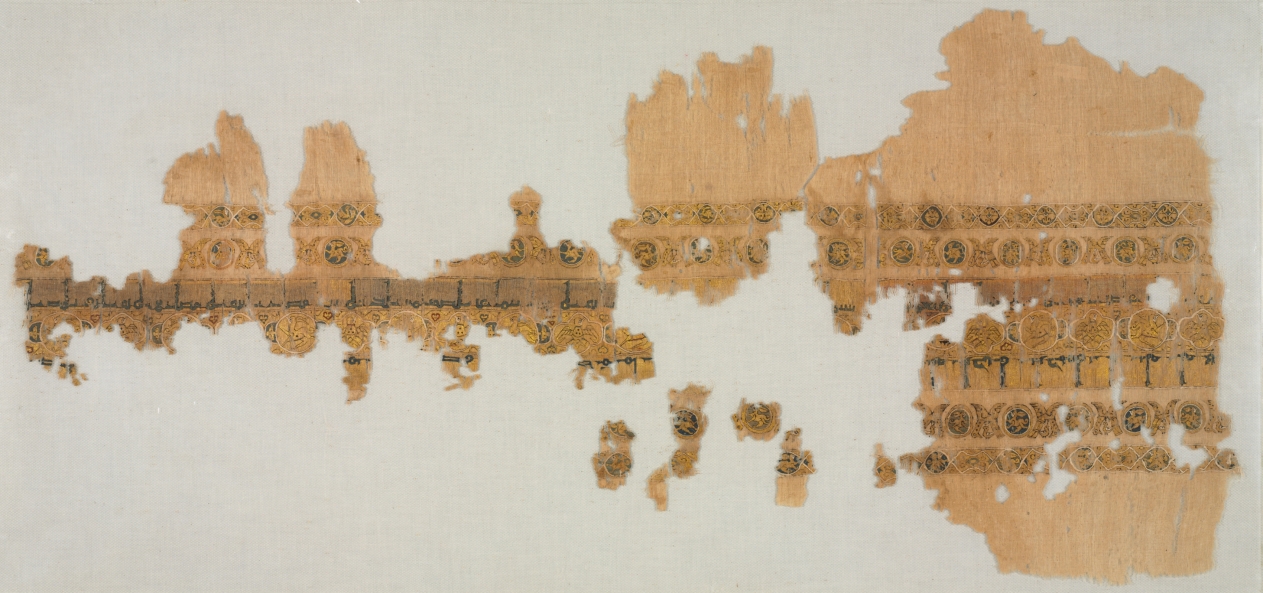
Tiraz with gold (1094–1101) is in the Cleveland Museum of Art collection.
The work and its context
The museum's open-access catalogue describes the work:
This essentially gold-on-gold fragment represents an artistic and technical pinnacle of tiraz woven with silk tapestry decoration around 1100. Expensive gold thread dominates in the decorative tapestry-woven bands in the open plain-weave linen ground. The bands with small roundels alternating with falcons attacking small birds required exceptional skill since they are more densely woven than the surrounding ground. Popular birds and animals of the hunt abound including heraldic eagles and hares. The elegant kufic script is mostly indecipherable.
Object facts
- Title: Tiraz with gold
- Date: 1094–1101
- Culture: Egypt, Fatimid period, reign of Caliph al-Musta‘lī, 1094–1101
- Type: Textile
- Technique: plain weave with inwoven tapestry weave: linen, silk, and gold filé
- Dimensions: Overall: 36.8 x 91.4 cm (14 1/2 x 36 in.); Mounted: 55.2 x 106.7 cm (21 3/4 x 42 in.)
- Collection: Textiles
- Department: Textiles
- Accession number: 1950.550
Collection credit
John L. Severance Fund
Further reading listed by the museum
- The Cleveland Museum of Art. The Cleveland Museum of Art Handbook. Cleveland, OH: The Cleveland Museum of Art, 1958.
- Mackie, Louise W. Symbols of Power: Luxury Textiles from Islamic Lands, 7th-21st Century. Cleveland; New Haven: Cleveland Museum of Art; Yale University Press, 2015.
View the collection record
See the museum's photographs and full catalogue entry. Catalogue text is reproduced from the Cleveland Museum of Art's open-access data, with HTML formatting removed. This object and its supplied image are designated CC0.
Sources
More in Lifestyle
Keep reading