Tomb Stele of Nesptah (664–525 BCE): Art, History and Details
Tomb Stele of Nesptah at the Cleveland Museum of Art: 664–525 BCE, painted wood. Explore the work's context, creator attribution and collection history.
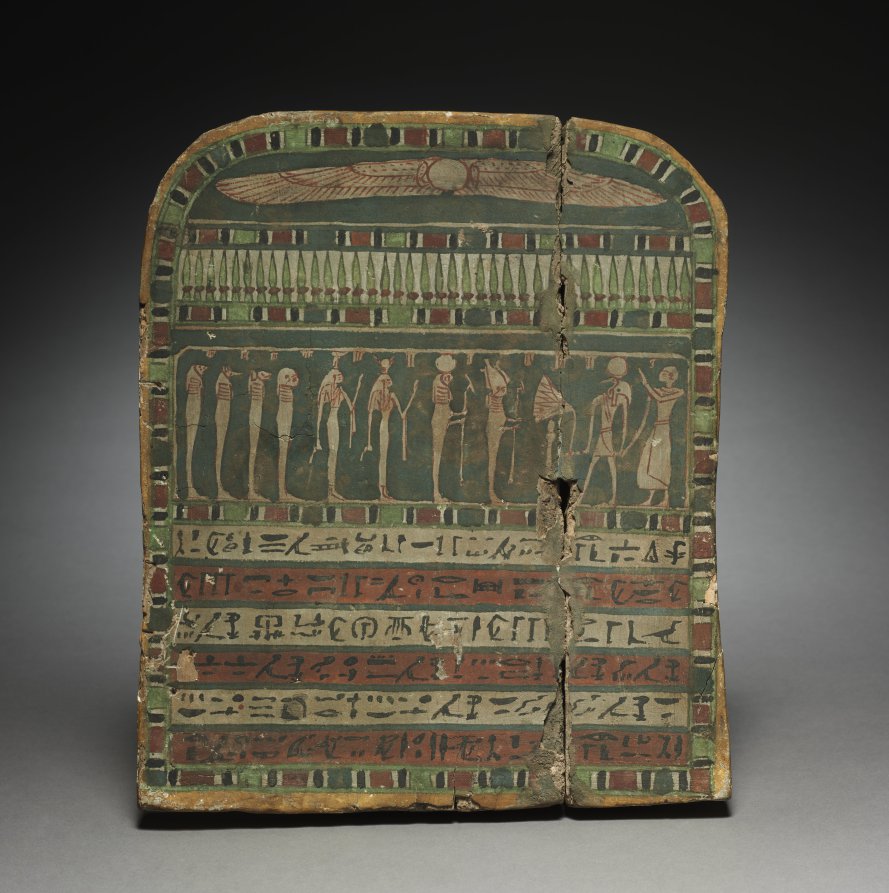
Tomb Stele of Nesptah (664–525 BCE) is in the Cleveland Museum of Art collection.
The work and its context
The museum's open-access catalogue describes the work:
A winged sun disk with pendant uraei (cobras) arches across the top of this funerary stele. The central scene depicts the deceased (at the right) being ushered by Thoth into the presence of the funerary gods. Led by Osiris and Ra-Horakhty, these gods are Isis, Nephthys, and the Four Sons of Horus. The tiny squares above them were intended for brief inscriptions naming each god, but the names were omitted, doubtless because of a lack of space.
Object facts
- Title: Tomb Stele of Nesptah
- Date: 664–525 BCE
- Culture: Egypt, Late period (715–332 BCE), Dynasty 26
- Type: Funerary Equipment
- Technique: painted wood
- Dimensions: Overall: 34 x 28.5 x 3.8 cm (13 3/8 x 11 1/4 x 1 1/2 in.)
- Collection: Egypt - Late Period
- Department: Egyptian and Ancient Near Eastern Art
- Accession number: 1921.1721
Collection credit
Gift of the John Huntington Art and Polytechnic Trust
Further reading listed by the museum
- Berman, Lawrence M., and Kenneth J. Bohač. Catalogue of Egyptian Art: The Cleveland Museum of Art. Cleveland, OH: Cleveland Museum of Art, 1999
View the collection record
See the museum's photographs and full catalogue entry. Catalogue text is reproduced from the Cleveland Museum of Art's open-access data, with HTML formatting removed. This object and its supplied image are designated CC0.
Sources
More in Lifestyle
Keep reading