Transenna Post (700s-800s): Art, History and Details
Transenna Post at the Cleveland Museum of Art: 700s-800s, marble. Explore the work's context, creator attribution and collection history.
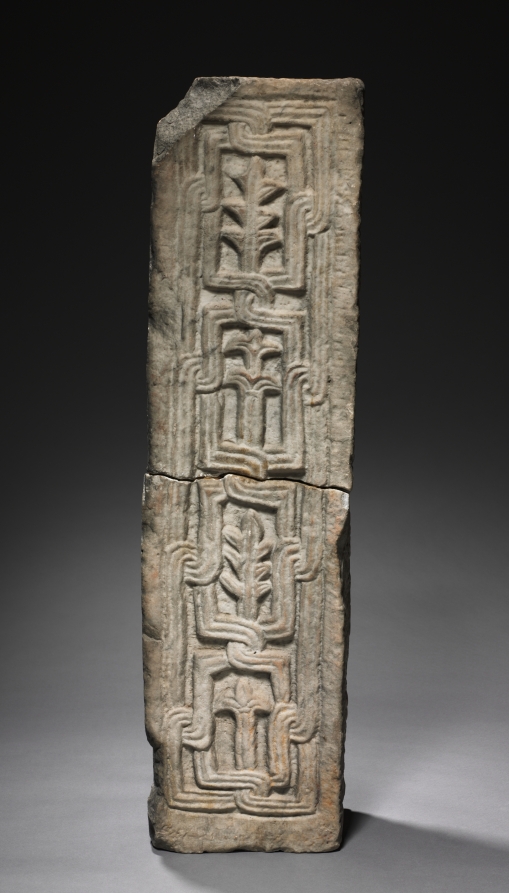
Transenna Post (700s-800s) is in the Cleveland Museum of Art collection.
The work and its context
The museum's open-access catalogue describes the work:
In Christian architecture a transenna is an openwork screen of stone or metal enclosing a shrine. These transenna elements were found in Rome; the posts were said to have been excavated on the Coelian Hill and may have originally formed part of the transenna of the Church of San Saba. The Lombards were an ancient Germanic-speaking tribe that settled in Italy after 568. Their artistic tradition was originally centered on small objects of personal adornment like buckles and brooches. After occupying Italy, the Lombards found themselves in contact with large-scale sculpture of classical and early Christian origin that, by the end of the 700s, they had learned to adopt and imitate, as seen here.
Object facts
- Title: Transenna Post
- Date: 700s-800s
- Culture: Lombardic, Italy, Rome, Migration period, 8th-9th Centuries
- Type: Sculpture
- Technique: marble
- Dimensions: Overall: 110.2 cm (43 3/8 in.)
- Collection: MED - Migration Period
- Department: Medieval Art
- Accession number: 1920.286
Collection credit
General Income Fund
View the collection record
See the museum's photographs and full catalogue entry. Catalogue text is reproduced from the Cleveland Museum of Art's open-access data, with HTML formatting removed. This object and its supplied image are designated CC0.
Sources
More in Lifestyle
Keep reading