Trivet (c. 1902–9): Art, History and Details
Trivet at the Cleveland Museum of Art: c. 1902–9, Glass, mosaic, bronze. Explore the work's context, creator attribution and collection history.
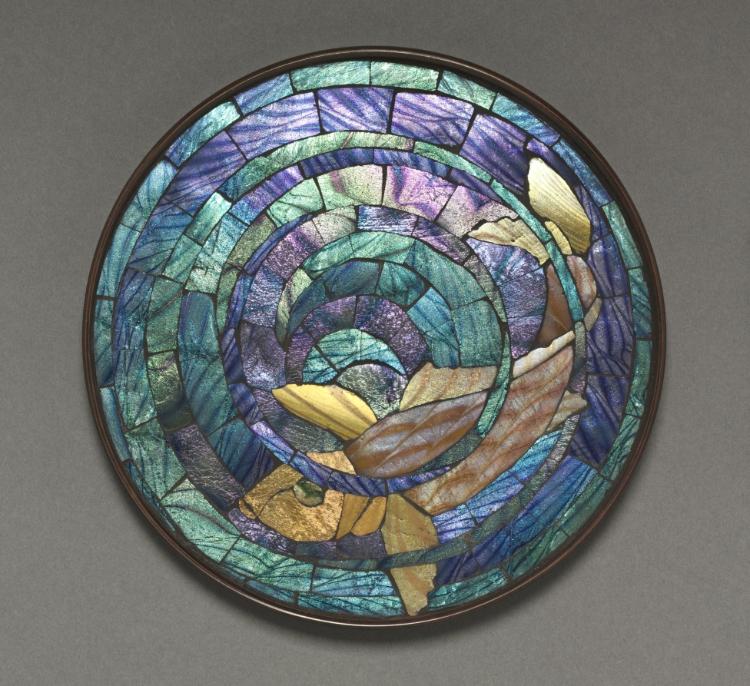
Trivet (c. 1902–9) is in the Cleveland Museum of Art collection. The museum's creator attribution is Clara Wolcott Driscoll (American, 1861–1944); Tiffany Studios (United States, New York, 1902–32).
The work and its context
The museum's open-access catalogue describes the work:
By 1900, Louis Comfort Tiffany had expanded his empire by increasing the firm’s production of “fancy goods,” including inkstands, candlesticks, clocks, small boxes, desk sets, tea screens, and other functional objects. Along with the array of artistic glass designs from his factory in Corona, Queens, works in ceramic, bronze, other metals, and even jewelry abounded. These smaller, more affordable luxury items were designed with as much thought to artistry as the great stained glass windows and lamps through which the firm enjoyed unrivaled success.
Object facts
- Title: Trivet
- Date: c. 1902–9
- Creator attribution: Clara Wolcott Driscoll (American, 1861–1944); Tiffany Studios (United States, New York, 1902–32)
- Culture: America, New York
- Type: Miscellaneous
- Technique: Glass, mosaic, bronze
- Dimensions: Overall: 1.3 x 17.8 cm (1/2 x 7 in.)
- Collection: Decorative Arts
- Department: Decorative Art and Design
- Accession number: 2018.278
A detail from the museum
Being careful not to waste material, Louis Comfort TIffany's artisans reused small shards of leftover glass in small mosaic fancy goods such as trivets and trays.
Collection credit
Bequest of Charles Maurer
View the collection record
See the museum's photographs and full catalogue entry. Catalogue text is reproduced from the Cleveland Museum of Art's open-access data, with HTML formatting removed. This object and its supplied image are designated CC0.
Sources
More in Lifestyle
Keep reading